
Amazon Is Showing Shoppers AI-Generated Fake Product Images — And the Internet Is Not Having It
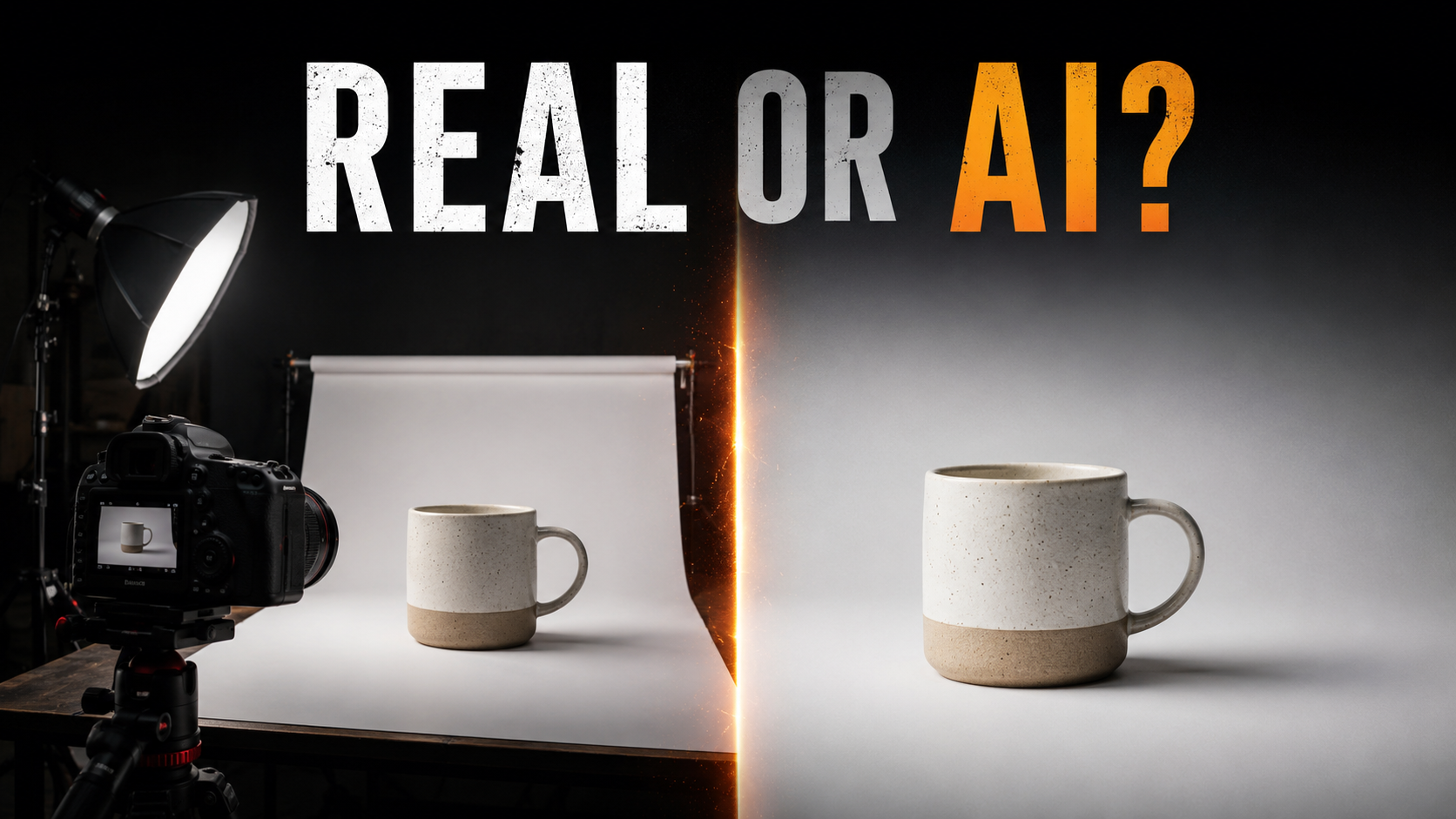
Amazon just rolled out a feature that shows shoppers AI-generated product images when they search for real items. The internet's verdict? "The dumbest use of AI yet." Digital Trends called it "catfishing shoppers." 9to5Google ran the headline: "one of the dumbest uses of AI yet." And CNET, TechCrunch, and practically every tech outlet piled on within 24 hours.
Here's what happened — and here's what it reveals about how far AI-generated product images have come.
1. What Amazon Actually Did
When you search for a product on Amazon right now, some results don't show actual product photos. They show AI-generated product images — computer-created visuals of what the product might look like, rendered by an AI image generator.
Amazon's framing: it helps shoppers "visualize" what they're looking for when real product photos are inconsistent or low-quality. Think of it as a visual placeholder — the AI-generated product images fill the gap between search intent and actual listings.
The problem, as every tech journalist immediately pointed out, is obvious: you're on a shopping platform looking at AI-generated product images that may or may not match anything real. It's like walking into a store where half the items on the shelf are paintings of products instead of actual products.
2. Why Everyone's Mad — and They Should Be
The backlash isn't about the technology itself. AI-generated product images are genuinely impressive — we'll get to that. The outrage is about trust.
Amazon built its empire on being the place where you buy real things. Product photos are the primary way shoppers decide what to click. Now some of those photos aren't photos at all — they're AI-generated product images created by an algorithm. If Amazon can swap in fake images for real ones, what's the line? Could AI-generated product images eventually replace real product photography entirely on the platform?
The term "catfishing" from Digital Trends is unusually sharp for tech journalism — and it lands because it's accurate. You search for a coffee maker. You see a beautiful AI-generated product image of a sleek stainless steel machine. You click. The actual product looks nothing like it. That's catfishing.
3. The Technology Behind AI Product Photography Is Terrifyingly Good
Here's the part nobody wants to admit: the AI-generated product images Amazon is using probably look better than most real product photos.
Modern AI image generators — GPT Image 2, Midjourney, Flux, and others — can produce photorealistic product shots that are virtually indistinguishable from real studio photography. White background, perfect lighting, no reflections on the glass, no dust on the surface. The AI-generated product images coming out of these tools are cleaner than 90% of what third-party sellers upload.
This is where the story gets interesting for anyone in e-commerce, marketing, or content creation. The technology that Amazon is controversially deploying in search results is the same technology you can use to create legitimate AI-generated product images for mockups, concept visualization, and marketing materials — with full transparency.
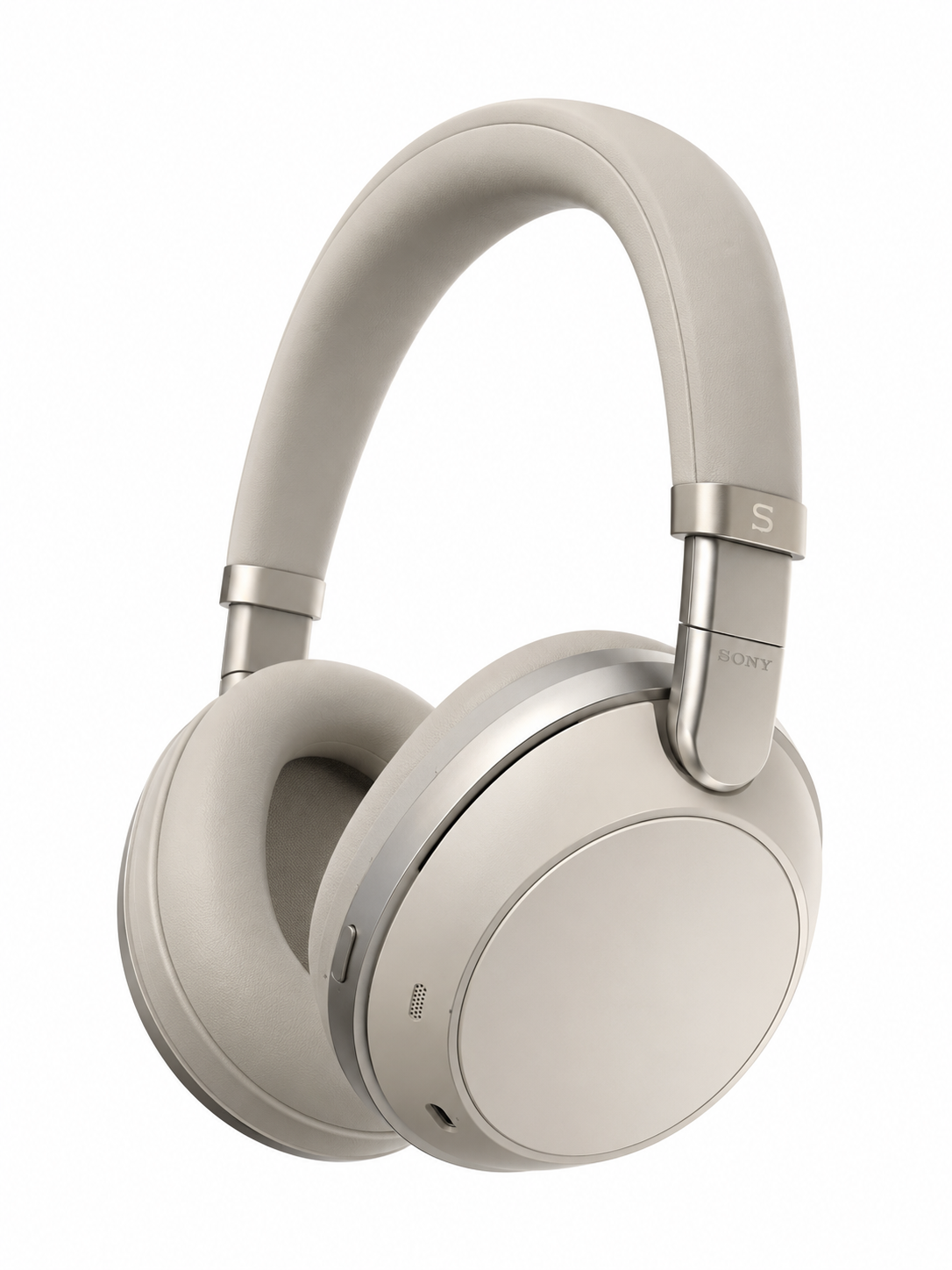
Let me show you exactly how these AI-generated product images are made. The process is simpler than you think.
4. The Prompt: Generate a Convincing Product Photo with AI
The secret to photorealistic AI-generated product images isn't complex software or expensive equipment. It's a well-crafted prompt. Here's the exact formula that produces studio-quality product photography from any AI image generator:
Copy the AI Art Prompt:
"Professional product photography of a [product description]. Shot on a white seamless background with soft diffused studio lighting. Clean minimal composition, sharp focus on the product, no shadows on the backdrop. 8K resolution, commercial product photography style, hyperrealistic detail on textures and materials. No text, no logos, no watermarks."
That's it. Swap in your product description — "minimalist ceramic coffee mug," "wireless noise-canceling headphones," "premium leather wallet" — and an AI image generator like GPT Image 2 will produce AI-generated product images that look like they came from a $5,000 product photography setup.
Here's a variation that places the product in a lifestyle context:
Copy the AI Art Prompt:
"Editorial lifestyle product photography of a [product] placed on a natural oak wood surface. Warm morning sunlight from a nearby window, shallow depth of field blurring the background. Aesthetic minimal composition, cozy home office setting. Shot on 85mm lens, f/2.8 aperture. Commercial lifestyle photography style."
Both of these prompts produce AI-generated product images that are clean, professional, and — here's the key — clearly identifiable as AI creations when you know what to look for. Understanding the tells is how you avoid being catfished.
5. How to Spot AI-Generated Product Images (Before You Get Catfished)
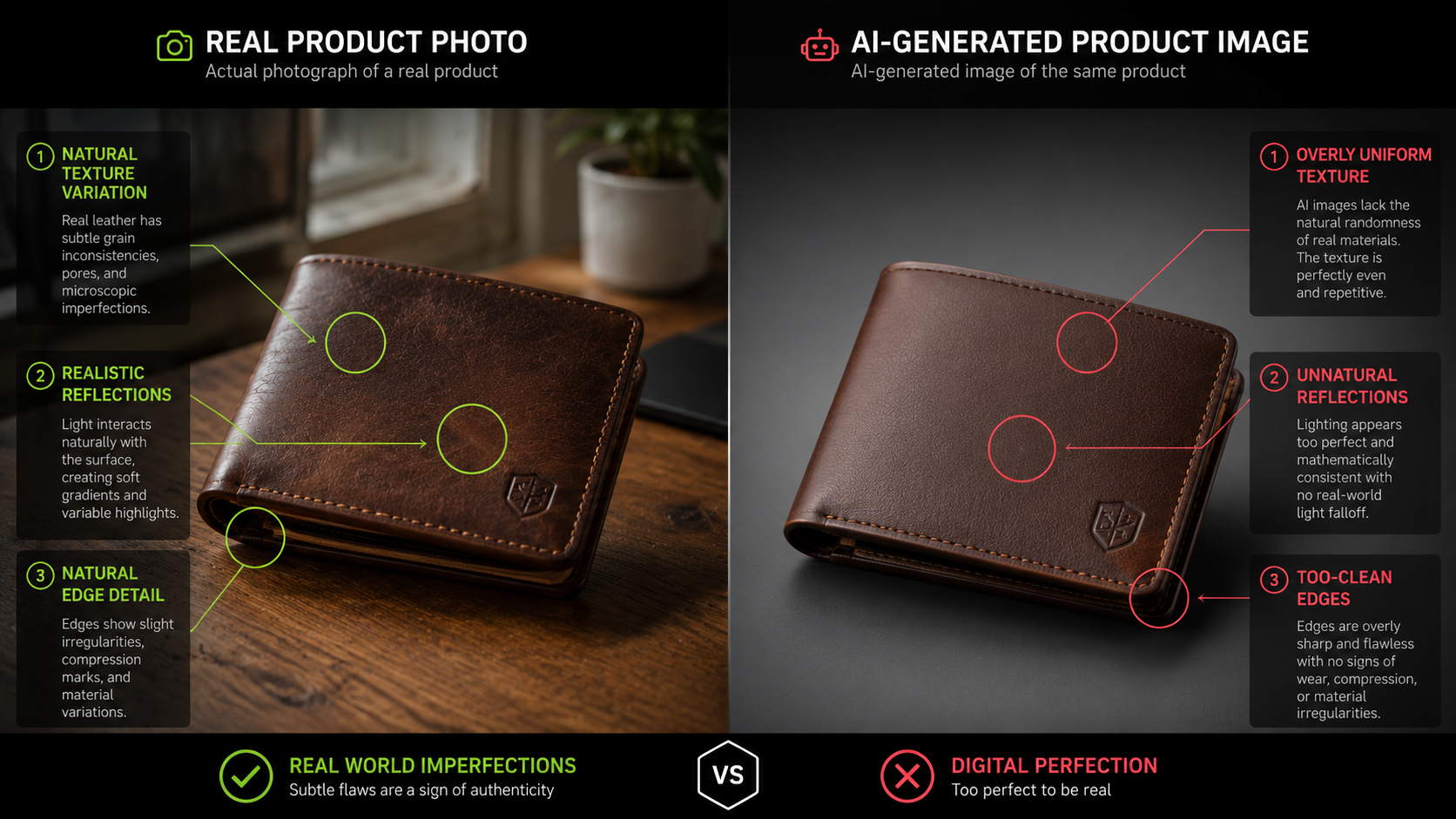
If Amazon is going to serve you AI-generated product images disguised as real product photos, you deserve to know how to tell the difference. Here are the giveaways:
🔍 Texture Consistency — Real product photos show natural material variation. AI-generated product images often render leather, wood grain, or fabric with unnaturally uniform texture. The grain repeats. The weave is too perfect.
🔍 Reflections and Highlights — An AI image generator struggles with complex reflections. Look at glossy surfaces, metallic finishes, and glass. If the reflections don't quite match the implied light source, it's likely an AI-generated product image.
🔍 Background Imperfections — Real white-background product shots have subtle gradients, tiny dust spots, or slight vignetting from the lighting setup. AI-generated product images on white backgrounds are too clean — mathematically perfect white that real cameras can't produce.
🔍 Small Details at Edges — Check the edges of the product against the background. AI-generated product images sometimes blur or warp fine details like USB ports, stitching, or embossed logos where the product meets the background.
🔍 Text and Labels — If there's supposed to be text on the product — a nutrition label, a spec sheet, a brand name — AI-generated product images often render it as garbled nonsense that looks like text from a distance but isn't.
6. E-Commerce Is Heading Toward AI Product Images — The Question Is Transparency
Here's the uncomfortable truth: AI-generated product images in e-commerce aren't going away. The technology is too good, too fast, and too cheap. A seller can generate 50 professional-looking AI-generated product images in the time it takes to photograph and edit one real product shot.
The real debate isn't about whether AI image generators should be used for product photography. It's about disclosure. If Amazon had simply labeled its AI-generated product images as "AI-generated visualization" instead of presenting them as product photos, the entire backlash disappears. The technology isn't the villain — the deception is.
For small businesses, indie creators, and anyone who sells products online, AI-generated product images are a game-changer for mockups, lookbooks, and concept pitches. When you tell your customers "this is an AI-generated visualization of the final product," you build trust instead of burning it.
The lesson from Amazon's misstep: use the best AI image generator for your product images — but use it honestly.
👉 Start creating your own product images: Fanch AI Image Generator