
The Search for the Best Realistic AI Image Generator: Saying Goodbye to "Plastic" Skin
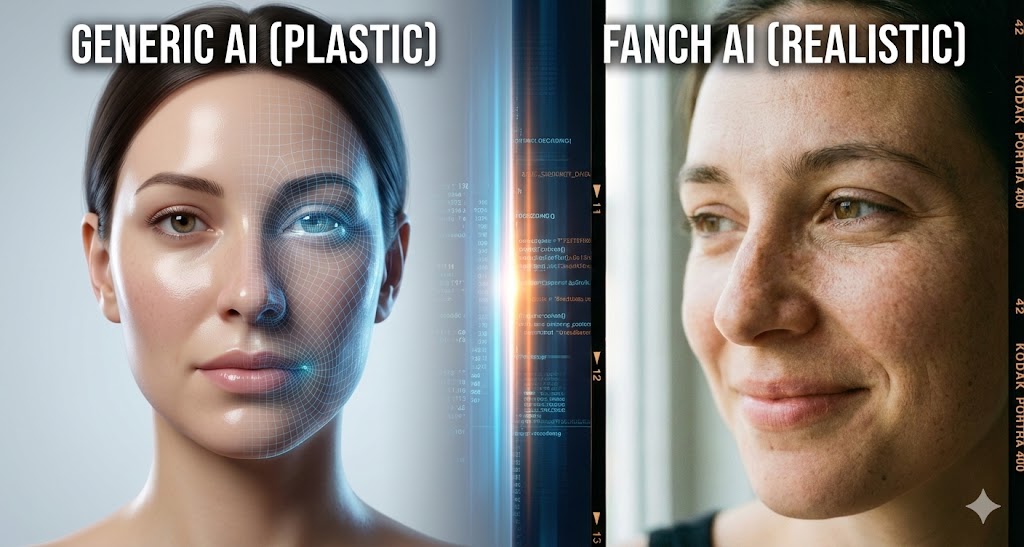
Type "realistic ai image generator" into Google, and you will get millions of results. Every tool promises photorealism. But when you try them, what do you usually get?
Skin that looks too smooth. Hair that shines like polished plastic. Eyes that stare blankly. The result is uncanny—an image that is technically "perfect" but completely devoid of human life.
If you are looking for a truly viable realistic ai image generator, you need to understand that realism lies in imperfection.
At Fanch AI, we put our specialized models to the test against the industry standard to show you the difference between a generic tool and a powerful realistic ai image generator.
The Problem: Why Generic Tools Fail as a Realistic AI Image Generator
Why do so many AI portraits look fake? It comes down to a lack of texture.
Standard AI models, when asked for a "portrait," tend to apply a heavy digital airbrush effect. They erase pores, fine lines, and the natural micro-textures of skin. They also struggle with complex, natural lighting, often defaulting to a flat look.
Here is a prime example of the output when a standard tool tries to act as a realistic ai image generator:
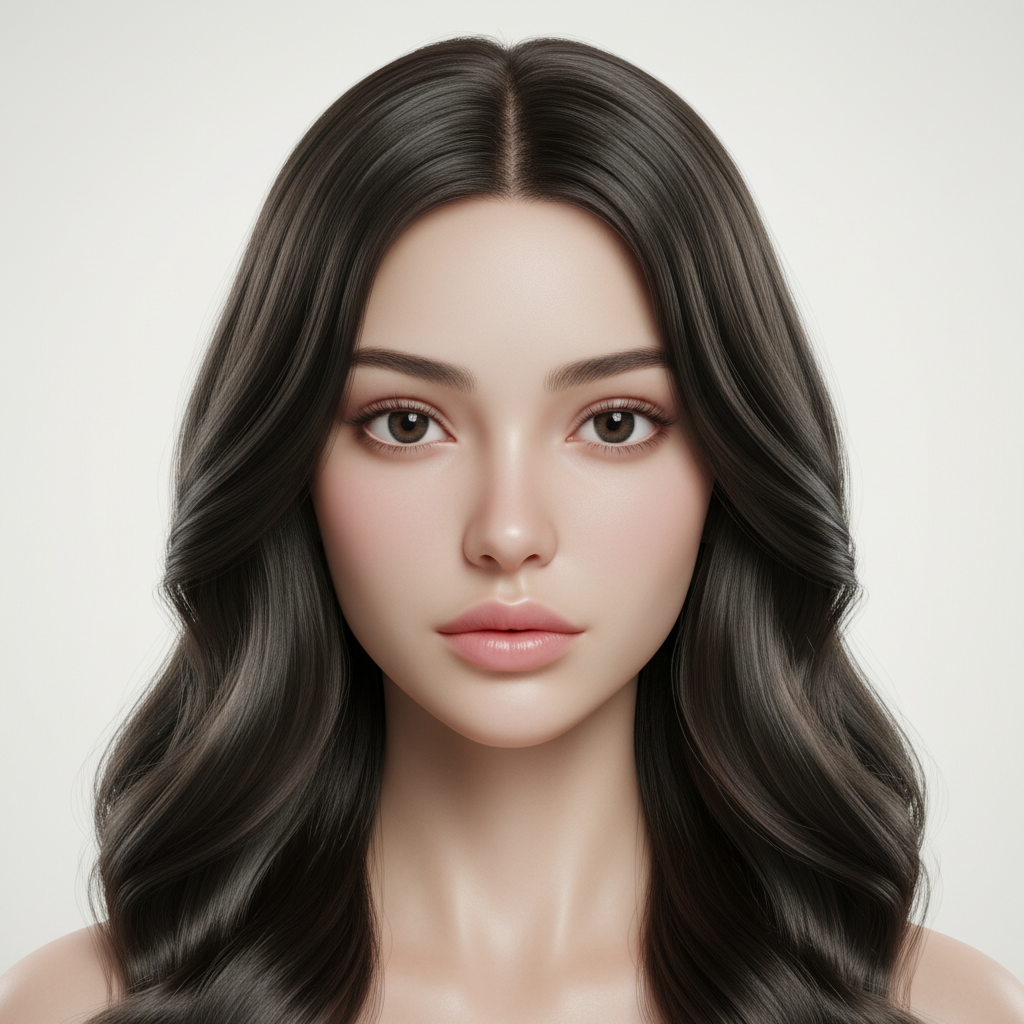 The "Plastic" Look: Notice the complete absence of pores, the unnatural symmetry, and the doll-like sheen on the skin. It's "perfect," but it's not real.
For stylized content, this might be fine. But if your goal is authenticity, this result proves it is not a capable realistic ai image generator.
The Solution: Fanch AI, The Ultimate Realistic AI Image Generator
To achieve authentic photorealism, you need a realistic ai image generator specifically fine-tuned to understand the physics of light and the biology of human skin.
On Fanch AI, we integrate specialized models like Nano Banana Pro, which excel at rendering the "messy" details that make a photo believable. These models understand that real skin has pores, that natural light creates complex shadows, and that film grain adds an organic feel that digital smoothness can't replicate.
We ran a similar portrait prompt through our platform to demonstrate what a true realistic ai image generator can do. The difference is night and day:
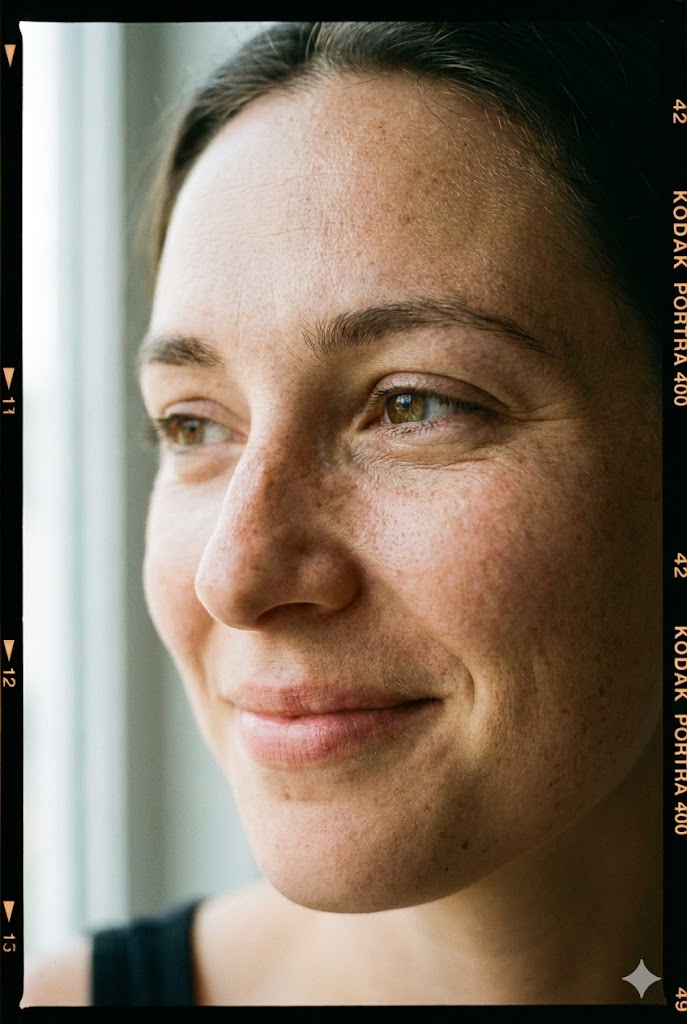 The Fanch AI Difference: This is the output of a top-tier realistic ai image generator like Nano Banana Pro. Look closely at the authentic skin texture, the natural freckles, fine lines, and beautiful film grain. This isn't just an image; it's a photograph.
How to Get These Results
Finding the right realistic ai image generator is half the battle. The other half is the prompt.
To avoid the "plastic look," stop using words like "flawless" or "smooth." Instead, guide the AI towards organic details.
Keywords for Realism:
- Texture:
visible pores,natural skin texture,skin details,slight imperfections,freckles. - Photography Style:
raw photo,film grain,Kodak Portra 400,candid shot,natural light.
Mastering these prompts with the right tool is key to unlocking the full potential of a realistic ai image generator.
Conclusion
Don't settle for plastic portraits. The technology for true photorealism is here, but not every platform qualifies as a top-tier realistic ai image generator.
If your work demands authenticity—whether you're a designer, photographer, or creator—you need a realistic ai image generator that understands the nuance of the real world.
Stop fighting with generic models that can't compete with a dedicated realistic ai image generator. Switch to Fanch AI and start creating images that feel human.
Ready to experience true realism? Try Fanch AI's Realistic Models Now