
Cat in the Hat AI Hoax: Police Debunk Viral Images | Fanch AI
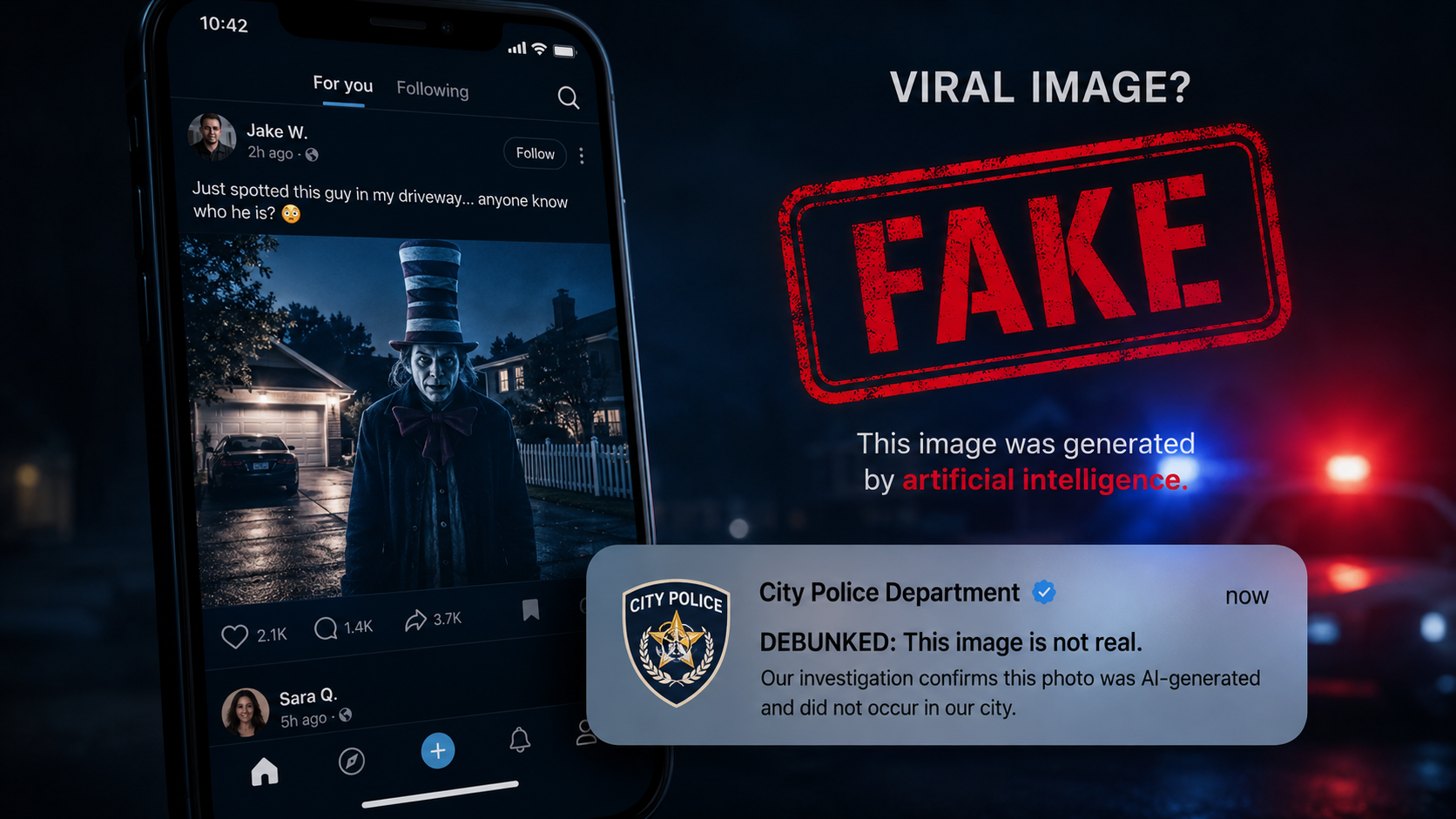
A Cat in the Hat AI trend just went from fun to frightening. AI-generated images and videos of Dr. Seuss' famous character as a "serial killer" stalking neighborhoods at night went viral across TikTok and Facebook — and got so convincing that police in Ireland and the UK had to issue public statements debunking them. "To be clear," one Irish police force announced, "the Cat in the Hat was not in your driveway." Here's what happened, why AI images spread so fast, and how to create fun AI content without adding to the panic.
The Cat in the Hat AI saga is the clearest example yet of the double edge of AI image generation: the same tools that create harmless viral fun can manufacture convincing fake reality in a few seconds. The trend started as playful videos; it ended with police warnings and a frightened teenager.
1. What Happened: The 'Cat in the Hat' AI Panic
The hoax began with AI-generated pictures and videos showing a human-sized Cat in the Hat lurking in residential neighborhoods at night, placed into recognizable local settings — which is what made them feel real. They spread across TikTok, Facebook, and messaging apps.
Police in Wexford, Ireland, issued an unusually direct statement: "In an unusual turn of events we are hearing a lot about an elusive Dr Seuss character doing the rounds online, apparently causing havoc in neighbourhoods and towns across the country. Fortunately, we can rule out the issue, which is essentially an AI prompt that places the character into images/videos of familiar places. To be clear, the Cat in the Hat was not in your driveway while you were out and he is not currently hiding out in Curracloe."
The prank spread from Ireland to the UK. South Yorkshire Police joked that they'd received no reports of "a Cat in the Hat" or "his associated Thing One and Thing Two." But a fake statement from a fictional "Yorkshire Police" account — claiming officers were investigating a sighting in Meadowhall at 2:30 a.m. — was shared as if real. The real force responded with the episode's most important warning: check that policing updates come from official accounts.
The fear was real. One 16-year-old told the BBC she was "totally freaked out" after watching the videos and called her mom to pick her up from a sleepover.
2. Why AI Images Like This Go Viral
The Cat in the Hat AI hoax worked because it combined three ingredients that make AI misinformation almost irresistible:
A familiar character. Everyone knows the Cat in the Hat, so the images trigger instant recognition — and instant alarm.
Familiar places. Placing the character into real, recognizable neighborhoods makes the fake feel local and immediate.
Convincing quality. Modern AI images are photorealistic enough that a quick scroll doesn't reveal the fakery. The telltale giveaways require actually looking.
This isn't the first time this exact pattern has panicked people — last year, a similar trend had people AI-generating homeless men inside their own homes and sending the images to parents, which led to police being called. The Cat in the Hat AI episode is bigger because the character recognition is universal.
3. How to Spot AI-Generated Images (and Not Get Fooled)
Here's how to protect yourself and your feed:
Check the source account. Is the claim from an official account — a real police force, newsroom, or brand? Fake statements from parody accounts are the #1 vector.
Look for official debunks. When something alarming goes viral, check whether authorities have addressed it — the Wexford statement was everywhere.
Use provenance tools. Images generated by major models now carry invisible SynthID watermarks and C2PA metadata. Tools like Google's "is this image AI-generated?" check can verify files — the watermark era we've been covering is exactly what this moment calls for.
Look at the details. AI images often fail at hands, text, and reflections. Zoom in before you share.
Pause before sharing. If a post is designed to alarm you, it's designed to be shared.
4. Create Fun AI Content Responsibly
The Cat in the Hat AI trend didn't have to turn into a panic — the underlying format (a character placed in familiar places) is pure harmless fun when done with original characters. Here are five responsible prompts that capture the same playful energy without any copyright or misinformation issues. All run on Fanch AI:
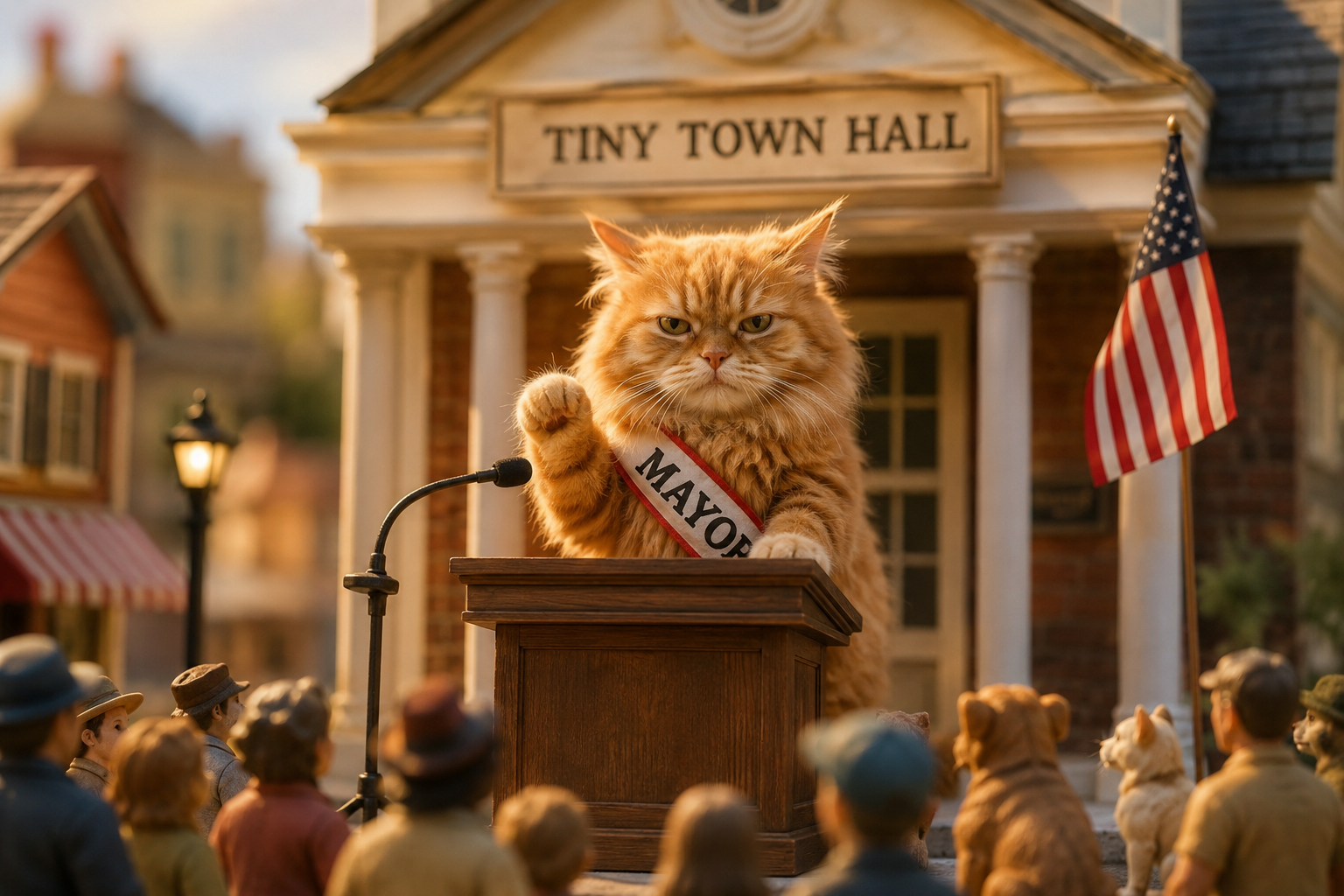
Prompt 1 — Pet mayor of a tiny town:
Whimsical photo of a fluffy orange cat wearing a tiny mayor's sash, standing at a miniature town hall podium in a dollhouse-scale town square, tiny citizens watching, golden afternoon light, shallow depth of field, adorable, photorealistic miniature scene.
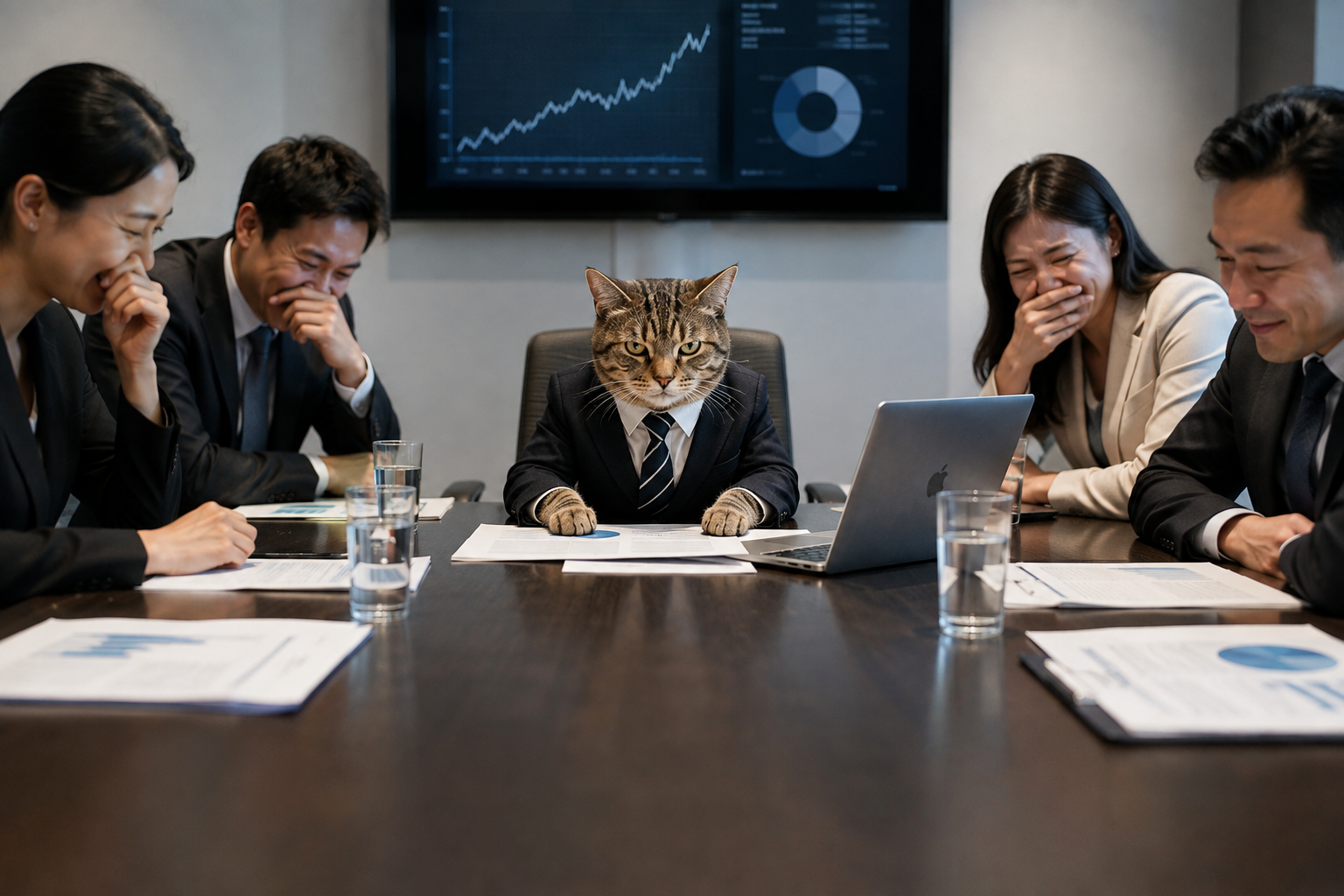
Prompt 2 — Cat in a board meeting:
Funny photo of a serious tabby cat sitting at a long corporate conference table wearing a tiny suit and tie, papers and a laptop in front of it, human colleagues around the table trying not to laugh, office lighting, photorealistic comedy scene.
Prompt 3 — Original mascot at a landmark:
A cheerful original mascot — a round blue robot with a propeller hat — posing at the Eiffel Tower at sunrise, tourists smiling and taking photos of it, warm golden light, photorealistic travel photo style, fun and friendly.
Prompt 4 — Whimsical creature in a café:
A tiny dragon with big eyes sitting politely on a café table holding a tiny espresso cup, steam curling up, cozy café interior, warm bokeh lights, whimsical and adorable, photorealistic with a touch of magic.
Prompt 5 — Funny caption photo:
A golden retriever wearing oversized sunglasses lying dramatically on a pool float in a backyard pool, a juice box within paw's reach, bright summer day, hilarious photorealistic scene ready for a funny caption.
These prompts keep the fun of the format — character meets familiar setting — with original characters that can't scare anyone or infringe copyright. The Cat in the Hat AI lesson is simple: the tool is neutral, the intent is everything.
5. Start Creating Responsible AI Content with Fanch AI
The Cat in the Hat AI episode shows how fast AI images can shape reality — for better or worse. On Fanch AI, you can create playful, original content with the same tools that made the hoax — minus the hoax. Make something that makes people smile, not something that makes them call the police.
👉 Start here: GPT Image 2 on Fanch AI