
Nobody Is Safe From Celebrity AI Deepfakes
A verified Instagram account with more than a million followers posted a photo of a famous actress. It collected nearly 500,000 likes, including from people in the entertainment industry. It was also completely fake — and it's far from an isolated case. AI deepfakes of celebrities have moved from novelty to a steady, high-volume business on social platforms. The economics of AI deepfakes are simple: cheap to make, fast to spread, and almost impossible to unsee.
The Verge's report on the problem is a useful map of where AI deepfakes stand in late 2026: what platforms say, what they actually do, and why the gap keeps widening. It's the most complete picture of AI deepfakes enforcement published so far.
The Case That Made the Point
The post purported to show actress Mia Goth, days after news of her divorce, wearing a T-shirt reading "MY EX IS MY BIGGEST FAN." The account posting it was labeled a fan page — but carried a blue verified checkmark. Within days, the image spread into gossip outlets and then into Google search, where an AI-generated overview repeated the fabricated framing as fact. That's how AI deepfakes graduate from a post to a perceived fact.
Instagram eventually removed the account for impersonating a public figure. But the sequence matters more than the ending: an AI deepfakes image became a trending topic, and the correction came after the reach.
Goth's representative was blunt about the checkmark. The fact that a fan account met Instagram's criteria for verification was "disconcerting on a fundamental level," Christine Tripicchio told The Verge, adding that it was "incomprehensible that Instagram evidently prioritizes the dissemination of forged and manipulated images over the protection and integrity of a public figure's likeness."
That's the core problem with AI deepfakes in one sentence: distribution outruns enforcement. And the gap widens with every AI deepfakes post that goes viral before anyone acts.
Why the Blue Check Made It Worse
Meta lets users pay for a blue verified badge, even when the account isn't run by the person it's named after. On a platform where verification still reads as authority, that's a meaningful failure mode for AI deepfakes.
A checkmark doesn't create an AI deepfakes problem, but it removes the friction that would normally slow one down. Viewers reasonably read verification as a signal of authenticity, which is exactly the assumption AI deepfakes exploit. Verification makes AI deepfakes more convincing without making them any more true.
The Scale Is the Story
Individually, the cases look like isolated stunts. Together, they describe a genre. AI-generated videos of public figures lip-syncing, dancing, or appearing in fabricated scenes are pulling serious view counts on Instagram. If AI deepfakes were rare, the view counts would be the story; because they're routine, the volume is.
- A synthesized celebrity rapping along to a Drake track: 1.8 million views.
- A cartoon ogre doing the same bit: 3.1 million views.
- A version featuring a late tech founder with a champagne bottle: 371,000 views.
- A formula-one pairing lip-syncing a pop hit: 2.9 million views.
There's even a version depicting a fabricated celebrity wedding at a fabricated arena. The formats are oddly specific and endlessly replicated — one account's take gets cloned by another within days.
AI deepfakes have become a content category with its own conventions, not a one-off misuse. That shift from incident to genre is what makes AI deepfakes so hard to police.

When It Turns Sexual
The Verge's reporting also documents a darker tier. AI deepfakes of female public figures are frequently sexualized: one profile posting AI-generated images of a well-known actress included contact information for advertisers alongside subscription links to adult platforms.
Another account posts realistic AI deepfakes of young actors and musicians, "always partially undressed or in sexualized positions." This is the category where the harm is most severe — and where the legal framework has moved fastest. It's also the tier that gives AI deepfakes their worst reputation.
What Platforms Are Actually Doing
Asked about eight accounts posting celebrity AI deepfakes, Meta said it had removed some of them, with two of the named accounts appearing to be taken down. Meta's stated rule: "We do not permit accounts to use someone's likeness to pose as that individual, regardless of whether the content is authentic or AI-generated."
The enforcement reality is messier — the Goth account had reportedly been reported before, and the AI deepfakes kept coming. Rules that exist on paper are only as good as the response time behind them.
Two structural factors explain the difficulty:
- No national right of publicity law in the US. Without a federal standard, AI deepfakes involving real people are largely being litigated platform by platform.
- Scale defeats review. Manual moderation cannot keep pace with the volume of AI deepfakes being uploaded, which is why detection tooling matters more than policy language.
- The Take It Down Act (2025) criminalizes distributing nonconsensual intimate imagery, including AI-generated content, and requires platforms to remove it within 48 hours. Narrow in scope, but enforceable.
YouTube's likeness detection is the most developed countermeasure described. It scans for visual matches to a person — and more recently, sound-alikes — and lets them request takedowns. Every adult with a YouTube account is now covered, though the company weighs public interest and newsworthiness before acting. It's the closest thing to a working answer to AI deepfakes so far.

What This Means for Creators
The practical lessons from the AI deepfakes wave apply to anyone generating images:
- Consent is the dividing line — using a real person's likeness without permission is the problem, not the tool.
- Verification is not authenticity — a checkmark says nothing about whether AI deepfakes produced the image.
- Detection is becoming standard — likeness scanning and provenance watermarks are moving from optional to expected.
- Fictional characters keep you clear — original characters and generic subjects carry none of the AI deepfakes liability.
The uncomfortable part is that the technology behind AI deepfakes is the same technology that makes legitimate creative work possible. The difference is whose face is in the frame — and that's a choice the person prompting makes, every time.
A Prompt to Try Today
This is how you use the same tools without the liability: original subjects, clearly synthetic. Nothing about this AI deepfakes controversy applies to a subject that never existed. Try this on Fanch AI:
Copy & Paste this into Fanch AI (Model: gpt_image_2):
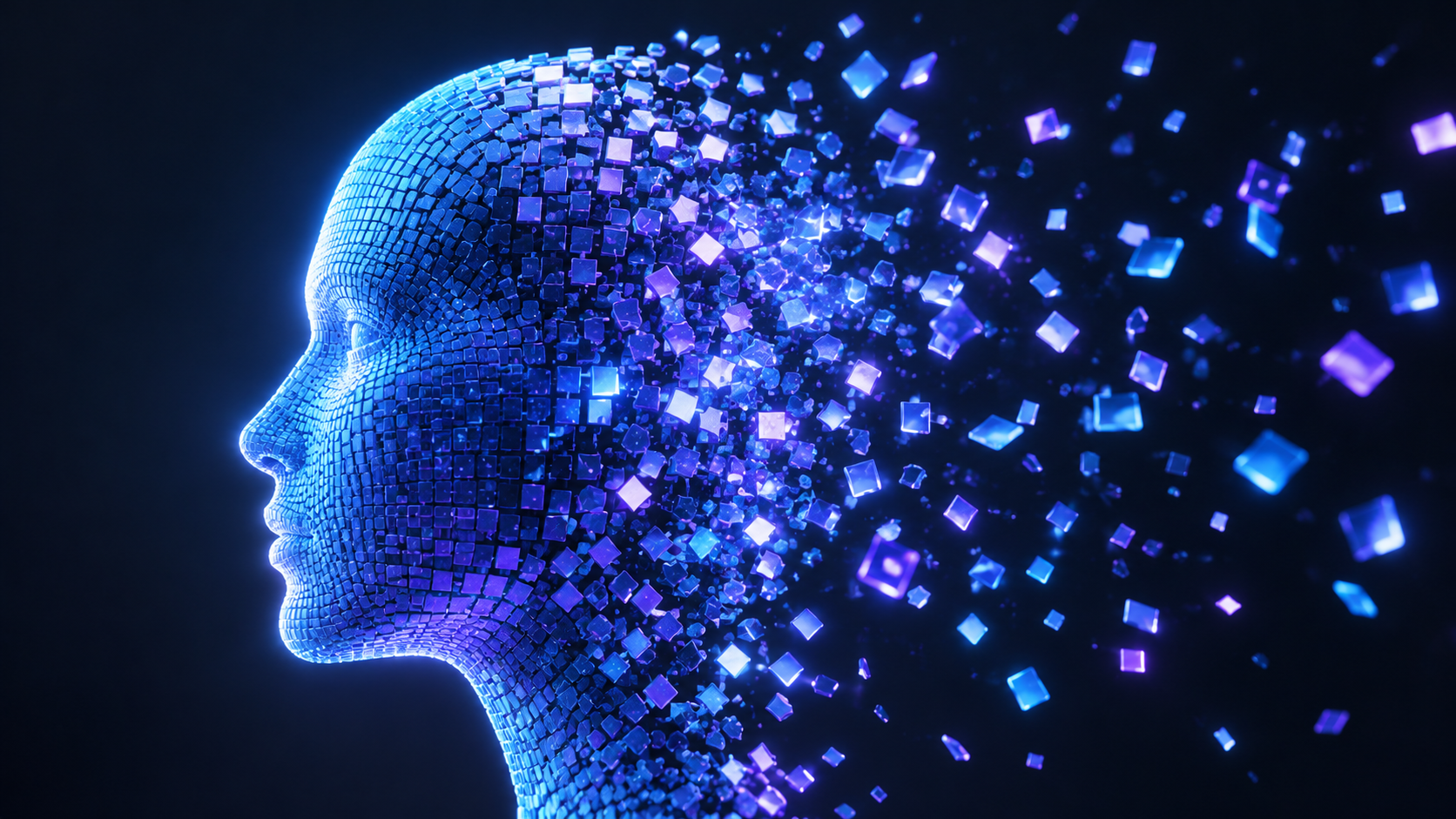
Create a striking abstract digital artwork: a generic human head silhouette formed entirely from thousands of small glowing mosaic tiles, with tiles dispersing and floating away toward the right edge of the frame. Cool blue and violet light on a deep charcoal background, soft glow around each tile, dramatic contrast, graphic design aesthetic. Clearly a digital abstraction rather than a photograph of a person, 16:9 framing, 8K detail, no text.
Why Fanch AI Keeps Creation on the Right Side
AI deepfakes are a likeness problem, and Fanch AI is built for creating original imagery — characters, products, scenes, abstractions — that doesn't require anyone's face but your own. A dedicated image model you direct with precise prompts gives you the upside of generative tools without the consent problem that makes AI deepfakes a legal minefield.
👉 Start here: GPT Image 2 on Fanch AI — create original AI images now.