ChatGPT Images 2.6: GIFs, Vectors, and Two Models With Different Jobs
ChatGPT Images 2.6 is not a quiet version bump. It adds two output formats ChatGPT Images 2.6 has never produced — animated GIFs and SVG — plus reusable references, a new planning dial, and a split into two API models with genuinely different jobs.
The context worth holding onto: OpenAI says users generate 4 billion images a week across ChatGPT, Codex and the API, more than 500 million a day. ChatGPT Images 2.6 is not a bet on a new market. It is a format expansion aimed at an installed base that is already enormous.
Here is what ChatGPT Images 2.6 actually shipped, and which parts change how you work.
What Shipped in ChatGPT Images 2.6
GIF creation. ChatGPT Images 2.6 can output animated GIFs for brand mascots, stickers, memes, and — the professional case — animatics that explore character motion before you commit to video.
SVG export. ChatGPT Images 2.6 can export SVG for direct use in websites, apps and print.
Saved reference images. In ChatGPT Images 2.6, references can be stored and reused, which is the consistency feature production work has needed for two years. OpenAI's own framing is keeping characters, products and brand details consistent through the editing process.
Image annotation in the API. A labelling feature that already existed in ChatGPT now reaches the API through ChatGPT Images 2.6, so teams can point at exactly what to change and where.
A complexity parameter. New in ChatGPT Images 2.6, separate from image quality — more on this below, because it is the least understood addition.
Availability. Live globally for ChatGPT and Codex on every subscription tier, across desktop, mobile and web. API access to ChatGPT Images 2.6 runs through the two models below.
Flare and Sunburst Are Not Two Speeds of One Model
This is the ChatGPT Images 2.6 detail most coverage flattens into "two faster models". They are aimed at different jobs.
GPT-Image-2.6 Flare is the speed model. At low image quality it can return an image in six seconds. It also specifically improves layout for posters, product images and other professional visuals — the composed, grid-aligned work that image models usually fumble.
GPT-Image-2.6 Sunburst is the precision model. At medium or high quality it produces higher-fidelity output and, more importantly, holds consistency better across multi-turn editing.
The practical split inside ChatGPT Images 2.6 is obvious once stated: draft on Flare, finish on Sunburst. Six seconds is fast enough to explore a dozen directions; Sunburst is what you use when the character has to still be the same character on the fourth revision.
That division of labour is the most consequential thing in ChatGPT Images 2.6, and it is the part most people will miss because both models share a version number.
GIF Is a Sprite Sheet, Not a Video
The most useful thing to understand about ChatGPT Images 2.6 GIFs is mechanical: the model produces a sprite sheet.
Look at how OpenAI's own launch examples are prompted. The instruction is to create "a single animation sprite sheet for a seamless looping GIF", with "exactly 6 sequential frames arranged in a precise 3-column by 2-row grid", read left to right then top to bottom, every panel identical in size, with the sixth frame designed to transition back into the first.
That is not a video generation problem; in ChatGPT Images 2.6 it is a frame-grid layout problem, and it explains both what ChatGPT Images 2.6 GIFs are good at and where they stop.
What this design gets right: small loops, character expression changes, UI micro-animations, stickers. The grid format is why a mascot going from hopeful to crying in six frames works.
What this means in practice for ChatGPT Images 2.6 GIFs: your quality is decided by how well you specify the grid and the increments between frames. Ask for a sprite sheet, state the frame count and layout exactly, describe each frame's change, and close the loop explicitly. Vague requests produce vague loops.
Where GIFs Actually Pay
Three ChatGPT Images 2.6 uses, in descending order of commercial value.
Animatics before video. ChatGPT Images 2.6 lets you storyboard a character's motion in six frames before spending on a video model. This is the professional case and the one worth the most, because it front-loads cheap failures.
Brand mascots. A six-frame expression loop is exactly what a mascot needs and exactly what a GIF is for.
Stickers, reactions and memes. The highest-volume use, and the reason GIF support matters to creators who are not selling anything.
The pattern in OpenAI's own ChatGPT Images 2.6 examples is telling: a chibi office worker reacting to a rising and a falling stock chart, a hand-drawn owl sketch turned into animation, a small character typing above a message box. All small, all expressive, all loops. Nobody is using ChatGPT Images 2.6 to make a film.
SVG Changes Who Can Use the Output
Vector export in ChatGPT Images 2.6 is the quieter change and the more commercially significant one.
Designers have never wanted pixels. They want paths they can recolour, resize and edit. OpenAI states that SVG from ChatGPT Images 2.6 can go straight into websites, apps and print — which, if it holds up, removes the trace-and-rebuild step that has kept AI out of primary brand work.
The caveat to test yourself: generative vector output is usually an approximation. Check the node count and editability, not just whether a file appears. An SVG with hundreds of unnecessary nodes is technically vector and practically useless.
The Complexity Parameter Is a Second Dial
ChatGPT Images 2.6 introduces complexity as a parameter distinct from image quality, and the distinction is worth internalising.
Image quality governs visual detail and fidelity.
Complexity governs how much effort the model spends planning, and therefore how rich the scene content is.
OpenAI's own guidance for ChatGPT Images 2.6: keep complexity low for most editing tasks, and raise it to medium or high only when the scene has many elements or many constraints. That is the opposite of the instinct most people have, which is to turn everything up.
For ChatGPT Images 2.6 work the implication is practical: most failed generations are over-planned, not under-specified.
Read the ChatGPT Images 2.6 Launch With Care
Three things to verify rather than assume.
The speed numbers are OpenAI's. Six seconds is measured at low quality on ChatGPT Images 2.6 Flare, on OpenAI's infrastructure. Your latency will differ, and quality settings change the number substantially.
ChatGPT Images 2.6 GIF output is a six-frame grid by default. That is a frame budget, not a duration. If your idea needs more than a handful of frames, the sprite-sheet approach becomes a layout problem rather than a creative one.
SVG fidelity needs testing. Export working is different from export being editable by a human designer.
What to Use ChatGPT Images 2.6 For Right Now
- Draft on Flare, finish on Sunburst — the core workflow change.
- Animatics — test character motion in six frames before committing to video.
- Sticker and mascot packs — specify the grid exactly and close the loop.
- Icon and logo exploration in SVG — then finish the winner by hand.
- Character consistency on real projects — save the reference, keep the prompt identical, and let Sunburst hold it across edits.
A Prompt to Try
The ChatGPT Images 2.6 reference-consistency feature is only testable with something specific and asymmetric — a form the model cannot accidentally simplify into something generic.
Copy & Paste this into Fanch AI (Model: gpt_image_2):
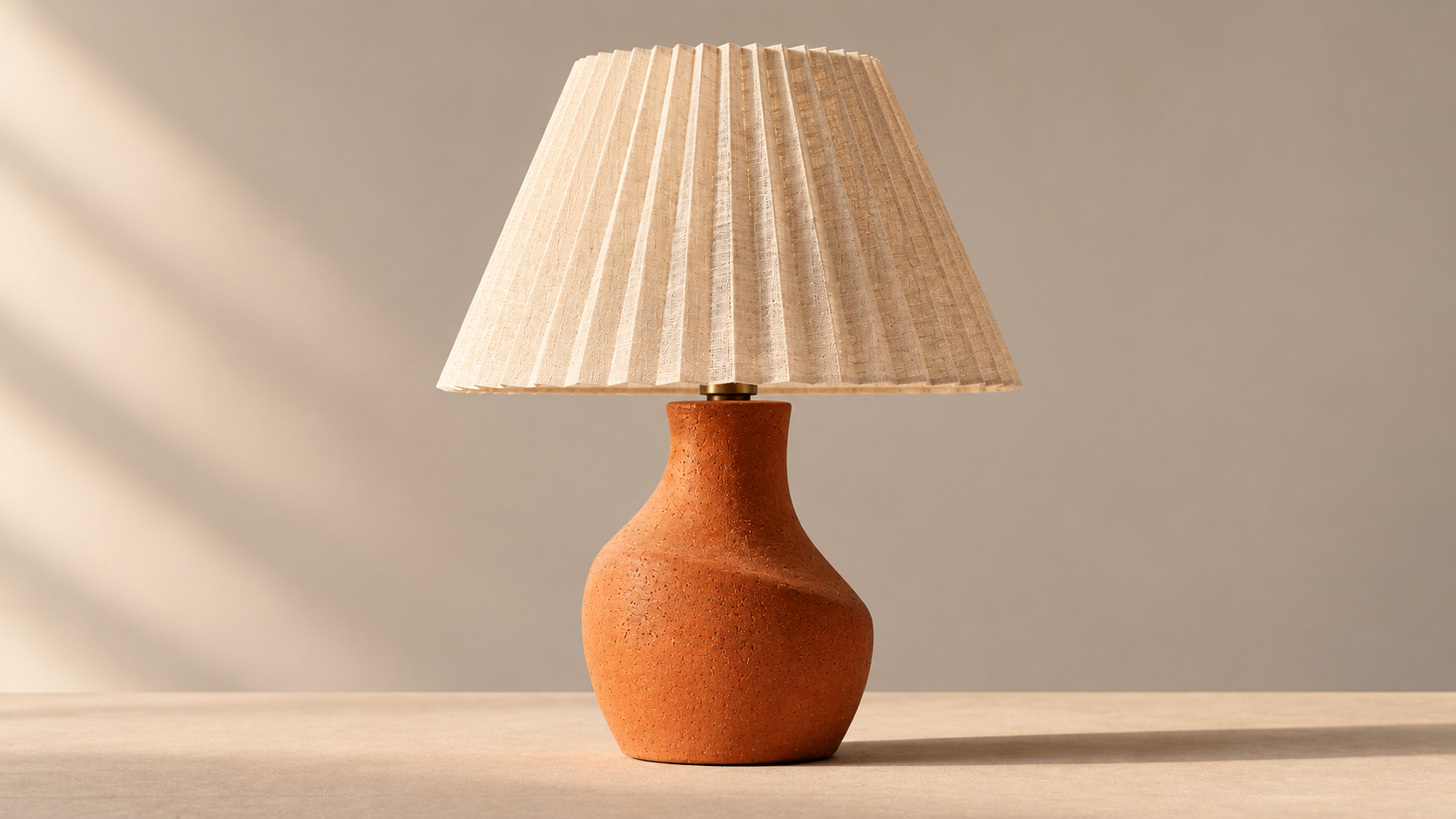
A clean studio product photograph of a small sculptural table lamp: a hand-thrown matte stoneware base in warm terracotta with an asymmetric pinched silhouette, topped by a pleated off-white linen shade, standing on a pale sand surface against a seamless warm grey backdrop. Soft directional studio light from the left, gentle falloff shadow to the right, fine speckled texture in the clay body and visible weave in the linen, 16:9 framing, 8K detail, no people, no brand logos, no text overlay.
That asymmetric silhouette is the test. A saved reference should put the pinch in the same place on every generation, and Sunburst should still have it there after four rounds of editing.
Why Fanch AI Fits
ChatGPT Images 2.6 confirms where this is going: image generation is now an asset pipeline with formats, references and model tiers, not a single magic button. The parts that decide whether your output is usable are still the same — a deliberate reference, a stable prompt, and a locked look.
Fanch AI gives you an image model you direct with precise prompts, so you can build canonical references and reproduce a look on demand, then carry that consistency into whichever model you finish on.