
7,095 Photos: The Number That Decides the ByteDance Image Lawsuit

Seven thousand and ninety-five. Not "millions of images", not "vast swathes of the internet" — 7,095 photographs, a number specific enough to sound like an inventory count, because it is.
EVOX Productions, an automotive photography firm, has sued ByteDance in the Central District of California, alleging that TikTok's parent company copied those 7,095 images as AI training data for Seedream, its image generator. The case is EVOX Productions LLC v. Bytedance Inc. et al, docket 5:26-cv-06428, reported this week by Music Business Worldwide and Digital Music News.
The accusation about AI training data is not the interesting part. Every AI training data lawsuit of the past two years has made a version of it. What makes this one consequential is the arithmetic that follows from the allegation.
What the Suit Alleges
Keep the status precise: these are allegations in a complaint, filed and not yet adjudicated. ByteDance has not been found liable for anything.
The allegation: EVOX's automotive photographs were scraped and used as AI training data for Seedream, ByteDance's image generation model.
The scale claimed: 7,095 images. Small in internet terms, and that is deliberate — it is a countable, catalogued set rather than an indeterminate mass.
The venue: a California federal court. The plaintiff is a Delaware LLC, the defendant a Delaware company, and the forum is the district where this class of case has been accumulating.
The precedent: no ruling on AI training data of this shape yet. This is a filing, and the outcome will depend on discovery, on how the court characterises the works, and on defences that have not been argued.
Why a Car Photography Firm Is the Plaintiff
This is the part worth understanding, because it explains why EVOX is a more dangerous plaintiff than a newspaper or a stock agency in an AI training data case.
Car photography is a catalogue, and catalogues are what AI training data claims are built on. Angle sets, model years, colours, interiors, wheel details — the work is systematic and enumerable. A firm like EVOX knows exactly what it owns and can point at each file.
Each image is separately identifiable. Watermarks, embedded metadata and consistent styling make provenance checkable, which is the weakest link in most AI training data allegations. The hard part of most AI training data cases is proving which specific works were used. A catalogued library with visible marks collapses that problem.
Volume and standardisation scale the claim. Thousands of similar images, each individually registrable, produce a claim that is both large and easy to itemise — the opposite of a news publisher arguing over an unquantifiable archive.
The business is licensing. A firm that sells per-image licences to dealerships and marketplaces has a clean argument about market harm: its entire revenue model is the thing allegedly removed.
That combination — enumerable, identifiable, licensable — is also why an AI training data plaintiff looks less like a media company and more like a photo library.
The Number That Decides the Case
Here is the mechanism most coverage will skip, and it is the whole ballgame.
In US copyright litigation, actual damages are hard to prove against a model. What plaintiffs reach for is statutory damages, which are awarded per infringed work rather than as a lump sum. So the exposure is not "how much harm" but "how many works times the statutory range" — in an AI training data case that multiplier is the entire argument.
Which means the pivotal legal question in this AI training data case is not whether copying happened. It is: does each photograph count as a separate work?
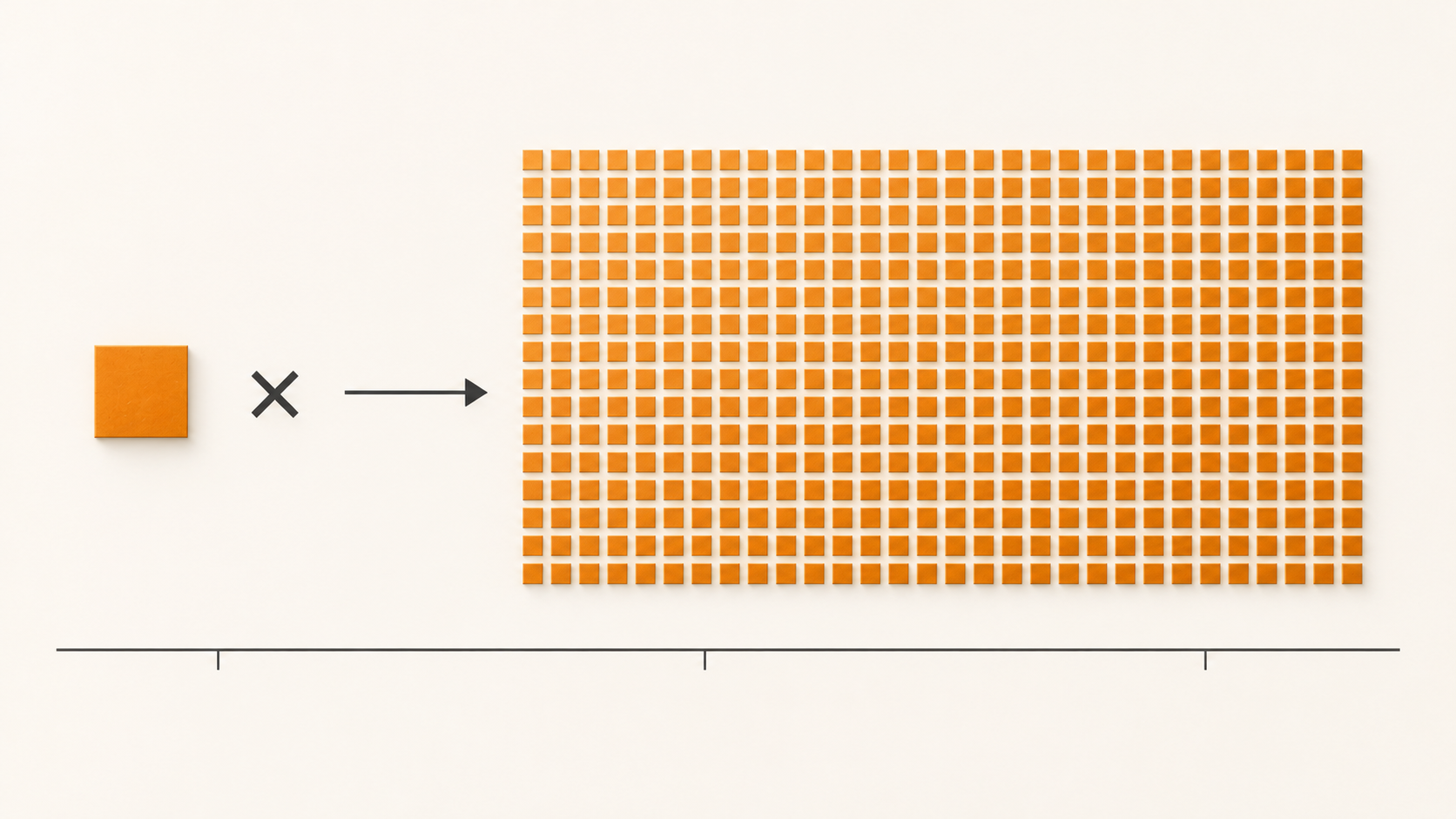
EVOX's filings in its related litigation make the theory explicit — that each individual image is a distinct work eligible for its own statutory award. In one filing in that parallel matter, the figure at issue is described in the hundreds of thousands. Applied here, the logic for AI training data is the same at a smaller scale: 7,095 images, each argued as its own work, multiplies a modest per-work award into a number that would function as a deterrent.
Expect the defence in this AI training data case to argue the opposite: that a catalogue is effectively one compilation, or that the count should be treated as a single collective work. That dispute, not the scraping, is what decides the size of the damage award.
For anyone building on AI training data, that is the number to watch. A ruling that each image is a separate work reprices AI training data scraping across the entire industry overnight.
EVOX Is Not a One-Off
EVOX has also pursued Midjourney over its images, in a parallel AI training data case. That changes how to read this filing.
A single aggrieved photographer suing once is a grievance. The same plaintiff running cases against multiple image model companies is a strategy: establish the theory, build a record, and settle or litigate across defendants. AI training data litigation has been consolidating into exactly this pattern, with a small number of repeat plaintiffs doing most of the work.
The practical consequence is that the ByteDance case will not be decided in isolation. Filings and rulings in the parallel cases will shape it, and any ruling on the "per work" question will travel.

What This Changes for Image Models
Three shifts, if the theory holds anywhere.
AI training data becomes a priced liability. Once a per-work multiplier is credible, dataset size stops being a free asset and becomes an exposure to be modelled. That changes how labs think about AI training data sourcing more than any ethics argument has.
AI training data licensing markets get real. If scraped catalogues carry risk, licensed catalogues carry value. The AI training data market that has been theoretical for three years gets a price signal.
Provenance of AI training data moves from nice-to-have to defensive. Being able to say where each training image came from is the difference between a manageable risk and an unbounded one.
What It Doesn't Change
Worth being clear about the limits, because the coverage will be overread.
This AI training data case does not make image generation unsafe for you. It is a dispute between a model trainer and a rights holder about AI training data sourcing. Nothing in it touches the legality of using a model that someone else trained, and nothing in it affects prompting.
It also does not settle the fair use question. The AI training data debate has been running for years without a definitive answer, and a district court filing does not produce one.
Read the Filing With Care
Four qualifications.
Allegation is not finding. No liability has been established, and the 7,095 figure is the plaintiff's own accounting.
The AI training data count is a methodology. "7,095" reflects how EVOX identified and matched images. Whether a court accepts that count is a separate question.
The per-work theory is contested. It is the plaintiff's argument, not the law.
Early-stage cases change. Complaints get amended, claims get dropped, and settlements are common in this area.
What This Means If You Make Images
If you train, provenance is now risk management. The AI training data you use is a balance-sheet item, not just a technical one.
If you license, your catalogue just got more valuable. Enumerable, identifiable libraries are precisely what the AI training data market now needs to be able to prove.
If you just generate, this is not your fight. Use the models, keep your prompts, and watch the per-work ruling, because it will eventually reach the pricing you pay.
A Prompt to Try
If you want imagery in the spirit of this story, the archive is the honest subject — the physical library that a catalogue business actually is.
Copy & Paste this into Fanch AI (Model: gpt_image_2):
A wide documentary photograph down the aisle of a vast photographic archive: long rows of steel filing drawers receding into dim depth on both sides, cardboard slide boxes stacked on open metal shelves, a single shaft of daylight falling from a high window and catching dust in the air. Fine detail in the brushed steel drawer fronts, worn paper labels and the fibre of the cardboard boxes, cool grey and warm sepia palette, deep perspective, slight vignetting at the frame edges, 16:9 framing, 8K detail, no people, no legible text.
An archive is the one image in this industry whose value depends on knowing exactly what is inside it.
Why Fanch AI Fits
The AI training data fight is about how image libraries get used, not about whether images should be made. That distinction matters: the exposure sits with the trainer who scrapes, not with the person writing a prompt.
Fanch AI gives you an image model you direct with precise prompts, so you can generate the imagery you need from description rather than from someone else's catalogue — and keep your own work, and your own rights, clearly defined.