
Why Future Software Isn't Made for You—It's Made for Your AI Agents
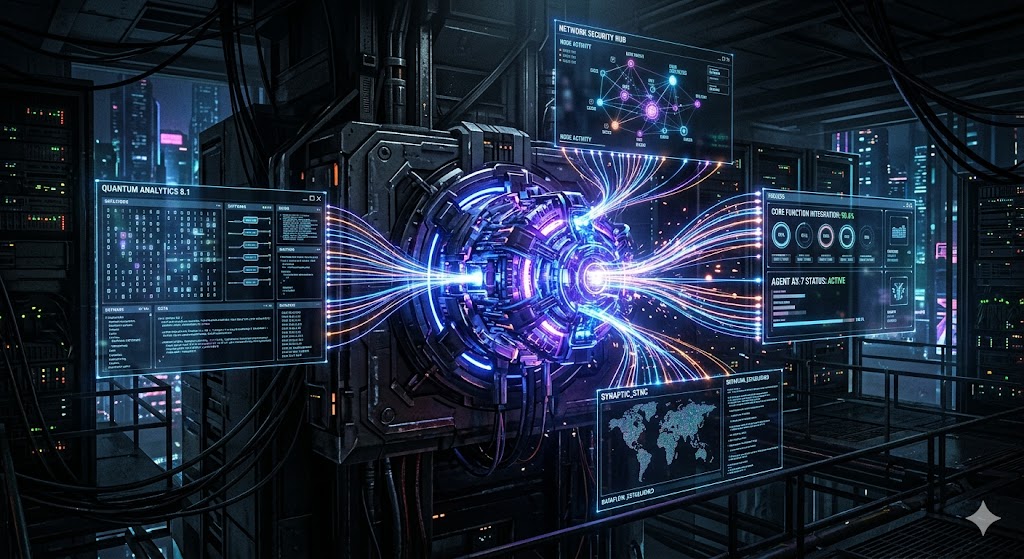
"Almost all software will be rebuilt." — Sundar Pichai, CEO of Google.
The digital landscape is undergoing a tectonic shift. For decades, we’ve been "users" of software—manual operators clicking buttons, dragging timelines, and navigating complex menus.
But that era is dying.
The next generation of future software won't be designed for human eyes and fingers; it will be designed natively as an interface for your AI Agents.
1. From GUI to ACI: The Great Transition for Future Software
Historically, software was built around the GUI (Graphical User Interface). Its purpose was to make complex machine logic understandable to humans. We spent years learning Photoshop shortcuts or Excel formulas just to communicate our intent to the computer.
In the near future, future software is moving toward ACI (Agent-Computer Interface).
Future software will no longer be a standalone "tool" but an "endpoint" for AI. The primary user of your video editor or CRM won't be you—it will be your AI Agents. You provide the Intent, and your AI Agents handle the execution through this new interface.
2. The Rise of "Intent-Driven" Design in Future Software
As the Google CEO pointed out in his April 2026 interview, the fundamental way we interact with technology is pivoting from Retrieval to Execution.
- Old Paradigm: You search for a tool, learn its functions, and manually perform tasks to get a result.
- New Paradigm: You state your goal (e.g., "Create a 60-second cinematic teaser of a cyberpunk city in a rainy neon aesthetic"), and your AI Agents orchestrate the necessary models to deliver the final product.
This is Intent-Driven creation. In this landscape, future software's core value will be determined by how easily your AI Agents can "plug in" and drive its functions. Intent-Driven workflows will replace manual inputs entirely.
3. Interoperability: What Makes Future Software Survive?
If future software isn't built for humans, what makes it "good"?
In the Agentic Era, the most successful future software won't be the ones with the flashiest human UI. They will be the platforms with the most Agent-friendly APIs and Workflows.
The competitive advantage of future software now lies in its interoperability. Can your AI Agents trigger a render, fetch a data point, or optimize a prompt within that platform seamlessly? If the answer is no, that future software is a legacy bottleneck for your AI Agents.
4. The Transformation of the "Individual"
We are witnessing the birth of the "Super Individual."
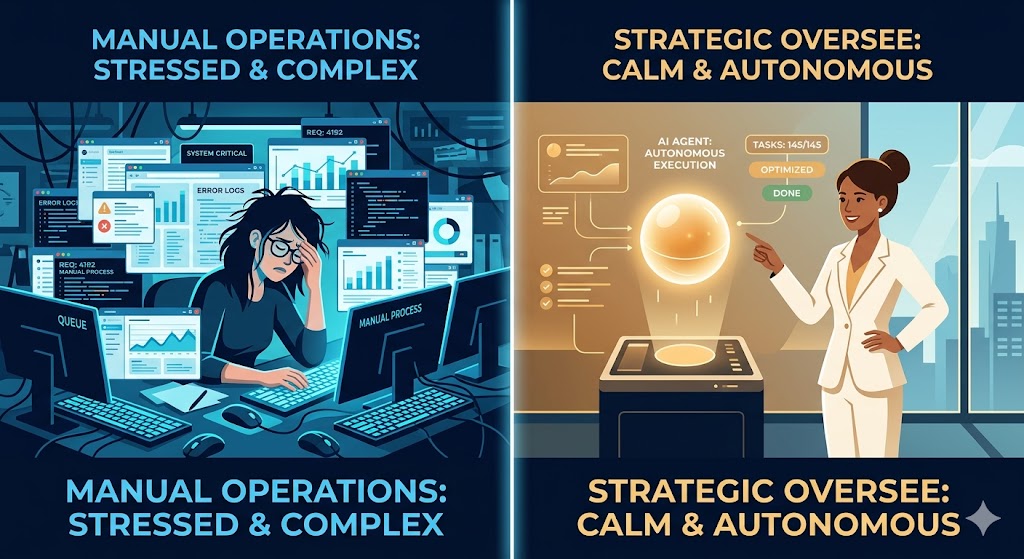
In the traditional software era, your output was limited by your manual skill with tools. In the Agentic era, your output is limited only by your vision and how well you direct your AI Agents.
You are no longer a "manual operator." You are a Director. Your job is to lead a fleet of digital employees who operate the rebuilt future software landscape on your behalf.
Conclusion: Adapt to Future Software or Be Rebuilt
The "Software Rebuild" isn't just about adding a chatbot to a sidebar. It's a fundamental reimagining of