
Gemini 3.8 Live Avatar: Google's AI Finally Has a Face

Google just gave its AI a face. Gemini 3.8 Live with Live Avatar builds on last week's Gemini 3.8 Live launch and adds something genuinely new: a real-time visual persona that listens, sees, and speaks back with lip-syncing and natural expressions. Everything notable about Gemini 3.8 is visible in that one feature — and it's the most human Gemini 3.8 has ever looked.
It's a striking shift. For years, AI assistants have been text boxes and voices. Gemini 3.8 Live turns the conversation into something you watch — and that makes it one of the most visual AI releases of the year. Where earlier assistants hid behind a waveform, Gemini 3.8 shows you a face.
What Live Avatar Actually Does
According to Google, the Gemini 3.8 Live Live Avatar feature pairs near real-time video generation with speech. The result is a dynamic character rather than a static avatar. And it's the feature that makes Gemini 3.8 feel like a product you watch, not just talk to. The core capabilities:
- Precise lip-syncing — the avatar's mouth matches its speech in real time.
- Natural expressions — the face reacts rather than holding a single frozen look.
- Fluid turn-taking — interruptions and back-and-forth feel conversational.
- Simultaneous visual and audio input — Gemini 3.8 Live processes what it sees and hears together.
- 97 languages — the avatar adapts lip-sync and expressions across languages without visual drift.
- Multiple characters — Google says Gemini 3.8 Live supports a range of characters, each with a distinct look, voice, and presence.
Each of these is rendered live, which is what separates Gemini 3.8 from pre-rendered avatar tools.
Available starting today in Gemini Enterprise — which tells you exactly who Google built this for.
Why the Multilingual Lip-Sync Is the Hard Part
Anyone who has watched a badly dubbed video knows how quickly a face stops being convincing. Mouth shapes differ wildly between languages, so a one-size lip-sync model tends to look wrong the moment the script changes. That's the problem Gemini 3.8 set out to solve.
Google says the Live Avatar in Gemini 3.8 Live handles this with native speech-to-speech synchronization, transitioning across all 97 supported languages without degrading video fidelity. That's the technical headline: Gemini 3.8 isn't just rendering a face — it's keeping that face believable while the language underneath it changes. It's the most impressive thing Gemini 3.8 Live does.
Built for Enterprise Support Bots
The launch framing is enterprise-first. Google positions Gemini 3.8 Live Live Avatar for customer service and interactive walkthroughs, where a visible, expressive agent feels more human than a chat window. It's a very different pitch from a text model, and it shows how much Gemini 3.8 leans on visuals — this is a Gemini 3.8 built to be seen.
It's a reasonable bet. Support interactions are already conversations; adding a face makes them feel less like a form and more like a call. And because Gemini 3.8 Live handles the visuals natively, companies don't have to stitch together a separate avatar pipeline — one more reason Gemini 3.8 is a platform play, not just a feature drop.
Why This Matters for Visual AI
Step back and the Gemini 3.8 Live announcement signals something bigger: faces are becoming an interface. When an AI can hold a convincing expression in real time, the visual layer stops being decoration and becomes part of the product. Gemini 3.8 makes that shift impossible to miss.
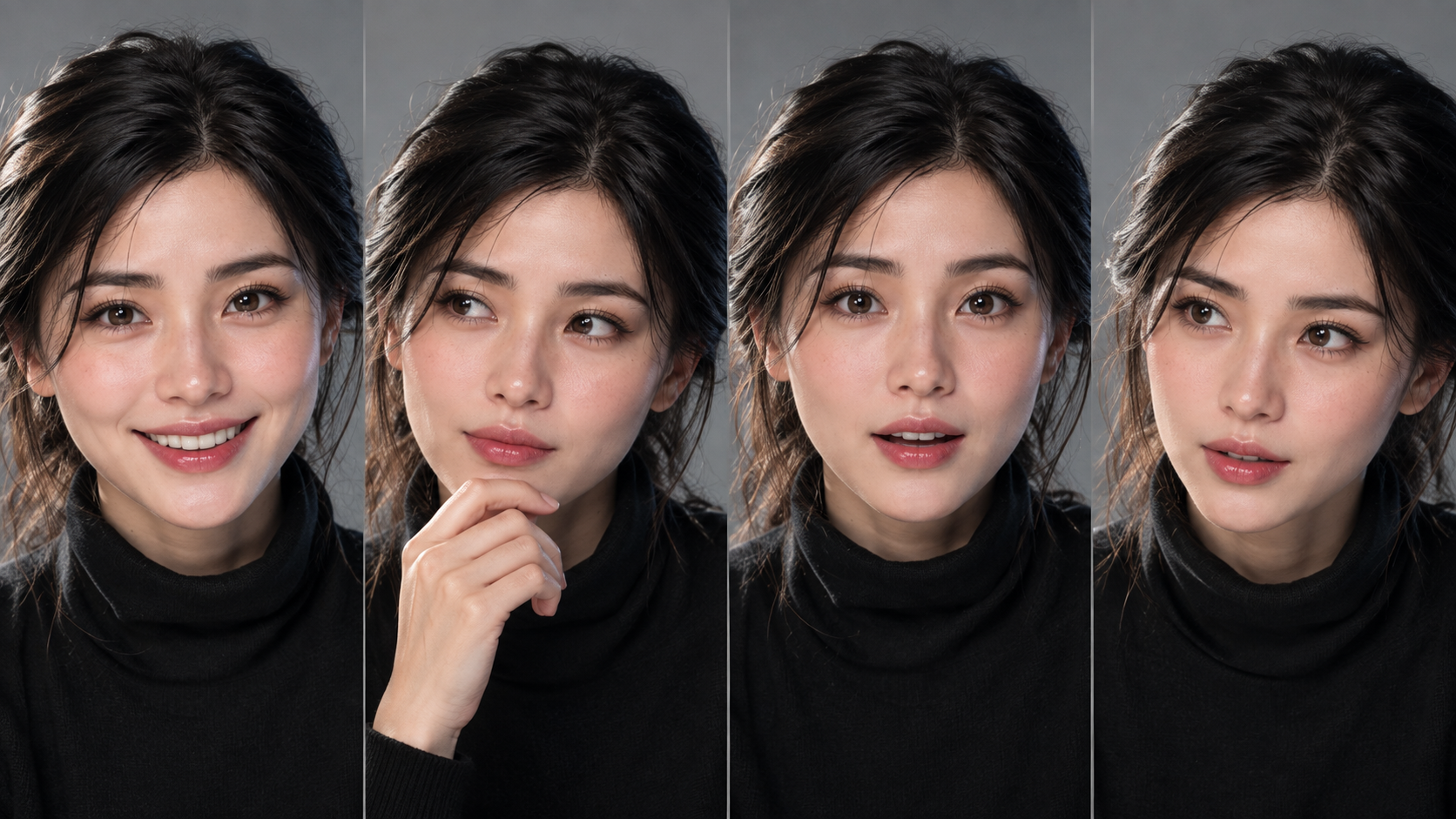
That raises an obvious question for creators. If Gemini 3.8 Live can animate a character, where does the character's look come from? A distinct face, wardrobe, and visual identity still has to be designed — and that's image generation work.
The Look of Your Avatar Is a Design Decision
Google notes that Gemini 3.8 Live supports many characters, each with a distinct look. Somebody has to create those looks. In practice that means a designer generating portrait concepts, iterating on styling, and locking a consistent visual identity before any animation begins.
That's the same workflow behind any brand character: decide the face, the palette, the wardrobe, then keep it consistent everywhere. Gemini 3.8 Live handles the performance; the design still starts with an image. In other words, Gemini 3.8 animates a character — it doesn't invent the brand behind it.

A Prompt to Try Today
If you want a character worth animating, start with the portrait. Gemini 3.8 Live gives it a performance — you still have to design the face first. Try this on Fanch AI:
Copy & Paste this into Fanch AI (Model: gpt_image_2):
Create a photorealistic studio portrait of a friendly, confident virtual assistant character: a person in their early thirties with warm brown eyes, neat dark hair, and a subtle smile, wearing a modern charcoal blazer over a crisp white shirt. Soft key light from the upper left with gentle fill, a smooth neutral gradient background, sharp facial detail, natural skin texture, editorial headshot framing, 16:9 composition, 8K detail, no text.
Why Fanch AI Is Where the Face Gets Made
Gemini 3.8 Live shows that animated AI faces are arriving fast. Fanch AI is where those characters get designed — a dedicated image model you direct with precise prompts to lock a look, a palette, and a consistent identity before any motion is added. Gemini 3.8 supplies the performance; Fanch AI supplies the face.
👉 Start here: GPT Image 2 on Fanch AI — create your own AI characters and images now.