
Gemini 4 Argon Is Here — and It's Not About Images

Google just announced Gemini 4, and it comes with a striking restriction: only "trusted cyber defenders" can use it right now. The model, codenamed Gemini 4 Argon, is the first new generation of Google's flagship since Gemini 3 — and it says a lot about where the frontier is heading. Gemini 4 is Google's biggest model release of the year.
Here's the interesting part for anyone making visuals: Gemini 4 is not an image model. Its launch pitch is code, law, finance, and cybersecurity. That gap is worth understanding — and it tells you more about Gemini 4 than any benchmark table.
What Gemini 4 Argon Actually Is
Gemini 4 Argon is Google DeepMind's new frontier model, announced on September 30, 2026. The core facts:
- First flagship since Gemini 3 — Gemini 4 marks a full generational step, not a point release.
- Cyber defenders first — access starts with a small group through Google's Fairwind Program.
- No cyber guardrails for that group — early defenders get Gemini 4 with its restrictions lifted so they can use its full abilities.
- Then everyone else — paid API customers and Google AI Ultra subscribers come next.
- Built for long workflows — Google positions Gemini 4 for software engineering, legal and finance work, and cyber defense.
Koray Kavukcuoglu, who now runs Google DeepMind day to day, called Gemini 4 Argon the company's "next era of frontier intelligence."
The Security Story Behind Gemini 4
The launch demo that got attention was a vulnerability find. Security firm Wiz used Gemini 4 to scan healthcare software running in hospitals worldwide and found a critical flaw that earlier frontier models had missed.
That's a genuinely strong result, and it explains the staged rollout. Google is also taking part in the US government's voluntary pre-release access process for frontier models. But the caution is real too: Bloomberg reported that some Google staff doubt how well Gemini 4 handles real work. Treat the benchmark claims — and the skepticism — as live questions. Even a model as advanced as Gemini 4 arrives with caveats.
What Gemini 4 Is Not
Notice what's missing from the Gemini 4 announcement: image generation.
That's not an oversight. Google's visual work lives in a different line — the Gemini image models and the Nano Banana family. Gemini 4 is aimed at reasoning, code, and defense, and Google is happy to keep those lanes separate. If you want pictures, Gemini 4 is simply not the endpoint.
The split is instructive. At the frontier, the money and the attention are flowing toward agents and code, while image creation has matured into its own specialized stack.
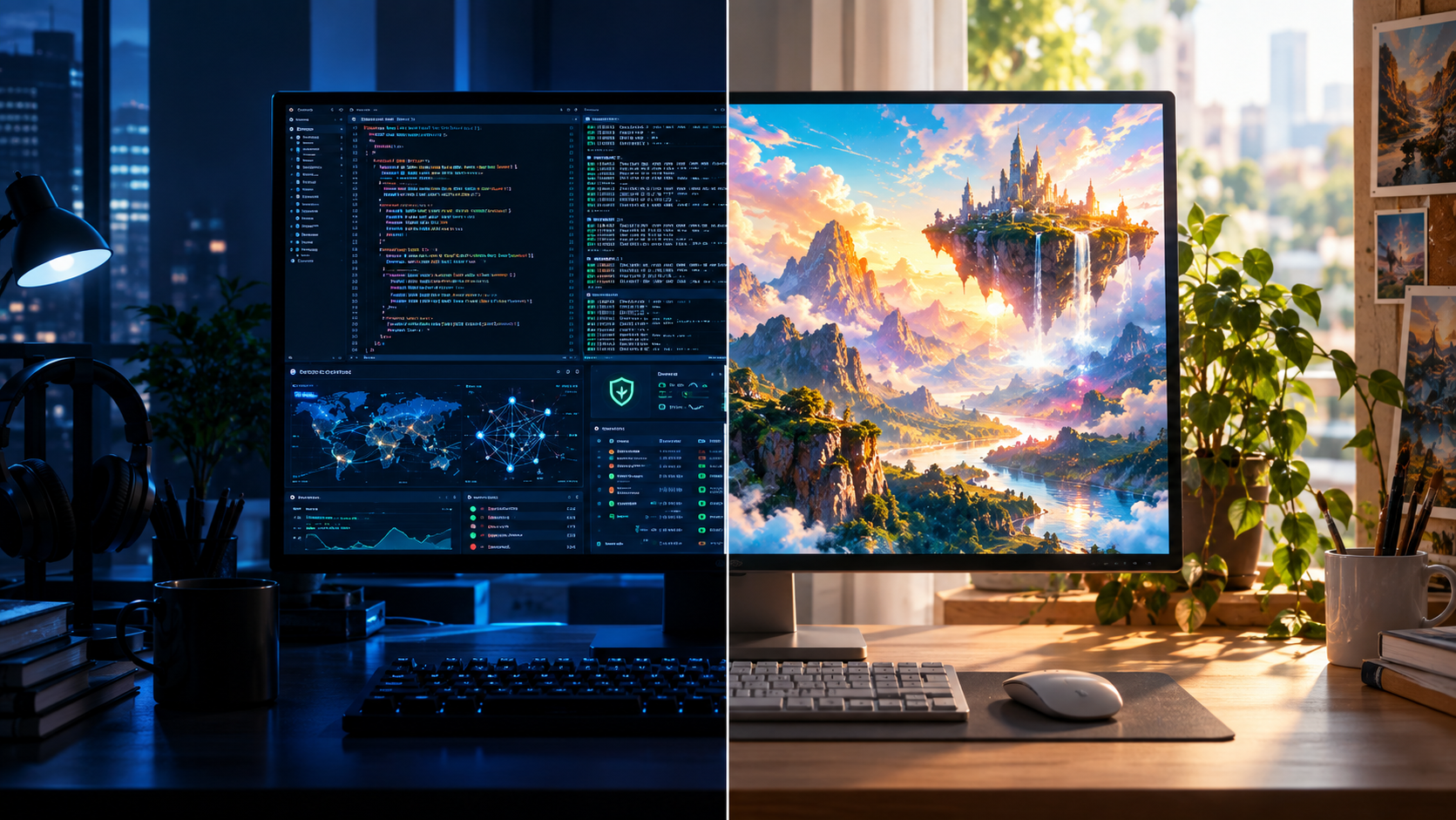
What This Means for Creators
The Gemini 4 launch carries three practical takeaways for anyone making images:
- The frontier isn't the same as the tool — Gemini 4 is state of the art at code and cyber, but that says nothing about image quality.
- Specialization is winning — Google keeps image generation in its own models, and so should your workflow.
- Access is staged — even when Gemini 4 opens up, it's aimed at enterprise developers, not creators making visuals.
- Your images don't need a frontier model — a dedicated image generator beats a general model at visual work.
That's the real lesson from Gemini 4: capability at the frontier is increasingly domain-specific, and picking the right tool matters more than chasing the biggest model name. Gemini 4 is the best example yet of a frontier model that simply isn't aimed at pictures.
A Prompt to Try Today
While Gemini 4 is busy finding vulnerabilities, you can make images right now. Gemini 4 won't help you here — a dedicated image model will. Try this on Fanch AI:
Copy & Paste this into Fanch AI (Model: gpt_image_2):
Create a dramatic, cinematic image of a futuristic cybersecurity operations center at night: a curved wall of glowing monitors showing abstract network maps and code, cool blue and cyan light spilling across a dark room, subtle reflections on a polished desk, and a single silhouetted figure in the foreground. Volumetric lighting, deep contrast, photorealistic, editorial technology photography, 16:9 framing, 8K detail, no text.

Why Fanch AI Is the Right Tool for Images
Gemini 4 is built to reason through code and security — not to make pictures. Fanch AI gives you a dedicated image model you direct with precise prompts, so you get finished visuals without waiting on a staged rollout or an enterprise program. That's the practical takeaway from Gemini 4: the frontier model is impressive, but the right tool for images is an image model.
👉 Start here: GPT Image 2 on Fanch AI — create your own AI images now.