
The Ultimate GPT-5.5 Prompting Guide: AI Video & Image Creation Playbook
The Ultimate GPT-5.5 Prompting Guide: The Evolution of AI Visual Creation
With the official release of the newest AI models, mastering the GPT-5.5 prompting guide has become essential for digital artists and developers alike. We are witnessing another massive leap in AI reasoning capabilities and Agentic UX. For global creators exploring advanced AI video generation or diving into complex AI image creation, the principles outlined in the GPT-5.5 prompting guide will fundamentally change the way we build prompts.
This educational article dives deep into the core changes of the new model and teaches you how to leverage the GPT-5.5 prompting guide to achieve exponential growth in your creative efficiency.
🔄 GPT-5.5 vs GPT-5.4: Core Logic Restructuring
When analyzing GPT-5.5 vs GPT-5.4, we can clearly see a shift away from stacking lengthy, process-heavy instructions. According to the GPT-5.5 prompting guide, this older approach not only adds noise but can also restrict the model's performance within its vast search space.
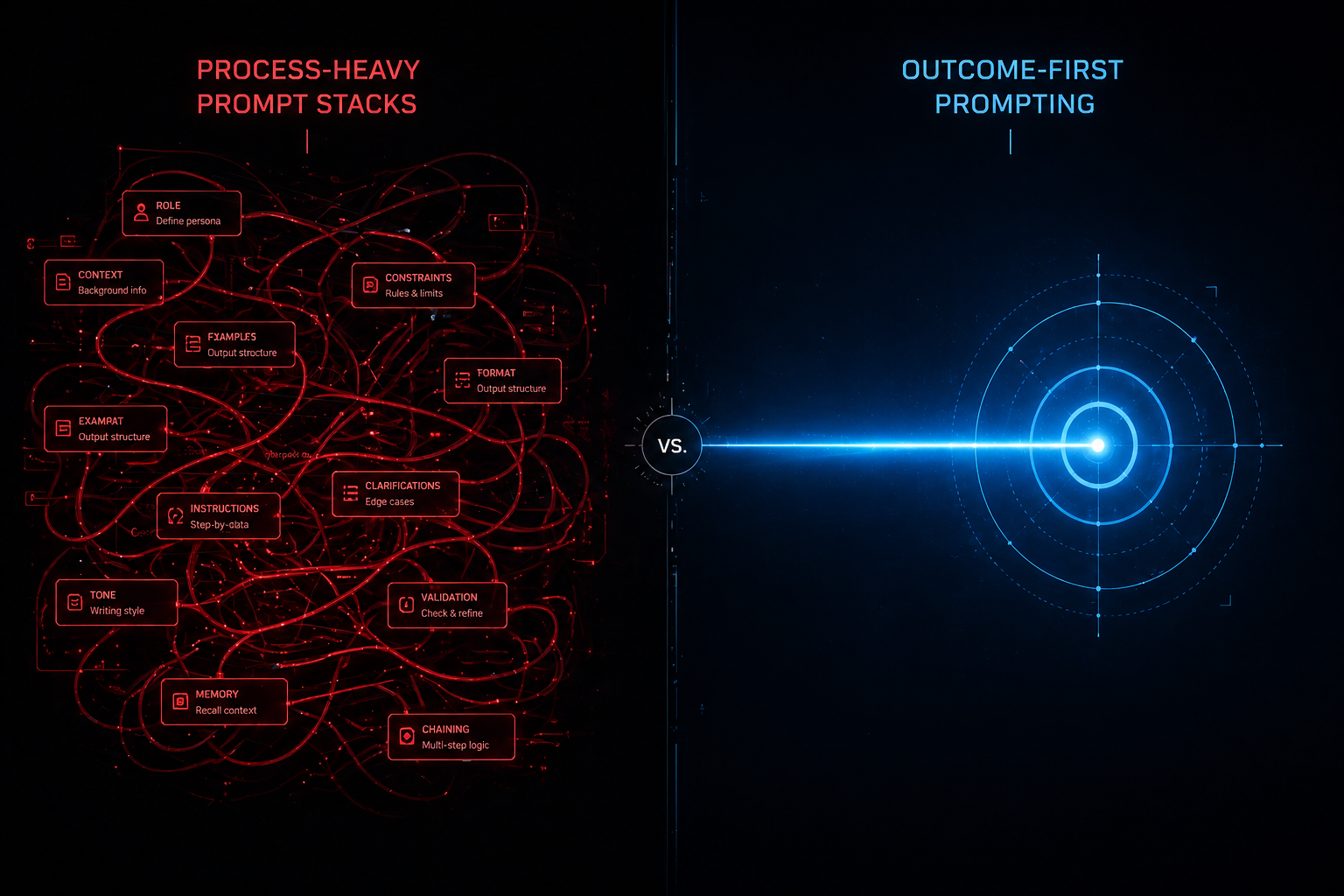
Here are the core behavioral differences when comparing GPT-5.5 vs GPT-5.4:
1. Prompt Structure
- Past (GPT-5.4 & earlier): Process-heavy; required step-by-step hand-holding.
- New (GPT-5.5): Outcome-first prompting; shorter, describing goals and criteria.
- Takeaways for AI Creators: Don't teach the AI how to write; tell it exactly what the final output should be.
2. Reasoning Efficiency
- Past (GPT-5.4 & earlier): Often required escalating to high-compute modes.
- New (GPT-5.5): Huge improvements in
lowandmediumeffort tasks. - Takeaways for AI Creators: Lowers API costs and drastically speeds up generating complex prompts.
3. Tool Workflows
- Past (GPT-5.4 & earlier): Prone to long pauses or "black box" states.
- New (GPT-5.5): Introduces Preambles and
phasehandling to improve visibility. - Takeaways for AI Creators: System responds much faster when brainstorming complex video storyboards.
4. Persona & Validation
- Past (GPT-5.4 & earlier): Default style was verbose and lacked boundaries.
- New (GPT-5.5): Requires explicit personality and strict retrieval budgets.
- Takeaways for AI Creators: Pinpoint control over output style, eliminating meaningless filler text.
💡 4 Key Rules from the GPT-5.5 Prompting Guide
To turn these underlying changes into actual productivity, we have summarized the following 4 critical strategies from the GPT-5.5 prompting guide:
1. Embrace Outcome-First Prompting
The most powerful aspect highlighted in the GPT-5.5 prompting guide is this: you just define the destination, and it maps the route. Outcome-first prompting means avoiding mechanical instructions like "first do A, then check B, then call C." Instead, clearly state the success criteria for your AI video generation.
- ❌ Old Paradigm: "First analyze this description, then extract visual keywords, then add lighting parameters, and finally output the prompt."
- ✅ Outcome-First Prompting: "Generate a precise prompt for a cyberpunk-style AI video. Success criteria: Include high-tension neon lighting descriptions, clear camera movements, and ask me questions if no reference material is available. Do not explain the process."
2. Leverage Preambles to Eliminate Wait Anxiety
When executing complex tasks (e.g., researching visual trends, writing a script, and generating prompts for AI video generation), the model takes time to reason deeply. By adding a Preamble rule ("Before any tool calls for a multi-step task, send a short user-visible update that acknowledges the request"), you can significantly improve the fluidity of the AI interaction.
3. Set Clear "Retrieval Budgets" and "Creative Guardrails"
The model possesses immense information retrieval capabilities, but for scenarios requiring accuracy, the GPT-5.5 prompting guide suggests setting boundaries.
- Retrieval Budgets: Tell the model when to stop searching. For example: "If the top results contain enough citable support, answer from those results instead of searching again."
- Creative Guardrails: When writing video scripts, clearly distinguish between "facts" and "creativity." Require the model to cite specific parameters, but allow it to creatively expand on the visual depiction.
4. Build Structured Prompt Templates
Based on the GPT-5.5 prompting guide, we recommend using a standardized structure to build your most complex AI agents:
- Role: Define the model's function (e.g., "You are a top-tier AI video director").
- Personality: Set the tone and collaboration style.
- Goal: The user-visible outcome.
- Success criteria: What must be true before delivering the final answer.
- Constraints: Format, length limits, and fallback rules.
🌍 Empowering Creators with a Global Vision

One of the greatest benefits of mastering the GPT-5.5 prompting guide is its application in localization. Leveraging the model's exceptional cross-lingual understanding alongside outcome-first prompting, creators can effortlessly localize a single video script into multiple languages. This ensures that the aesthetic and narrative quality of your AI video generation remains consistent, whether you are targeting English, Japanese, Spanish, or any other global audience.