HyperKnown Wants to License Real Faces for AI Ads
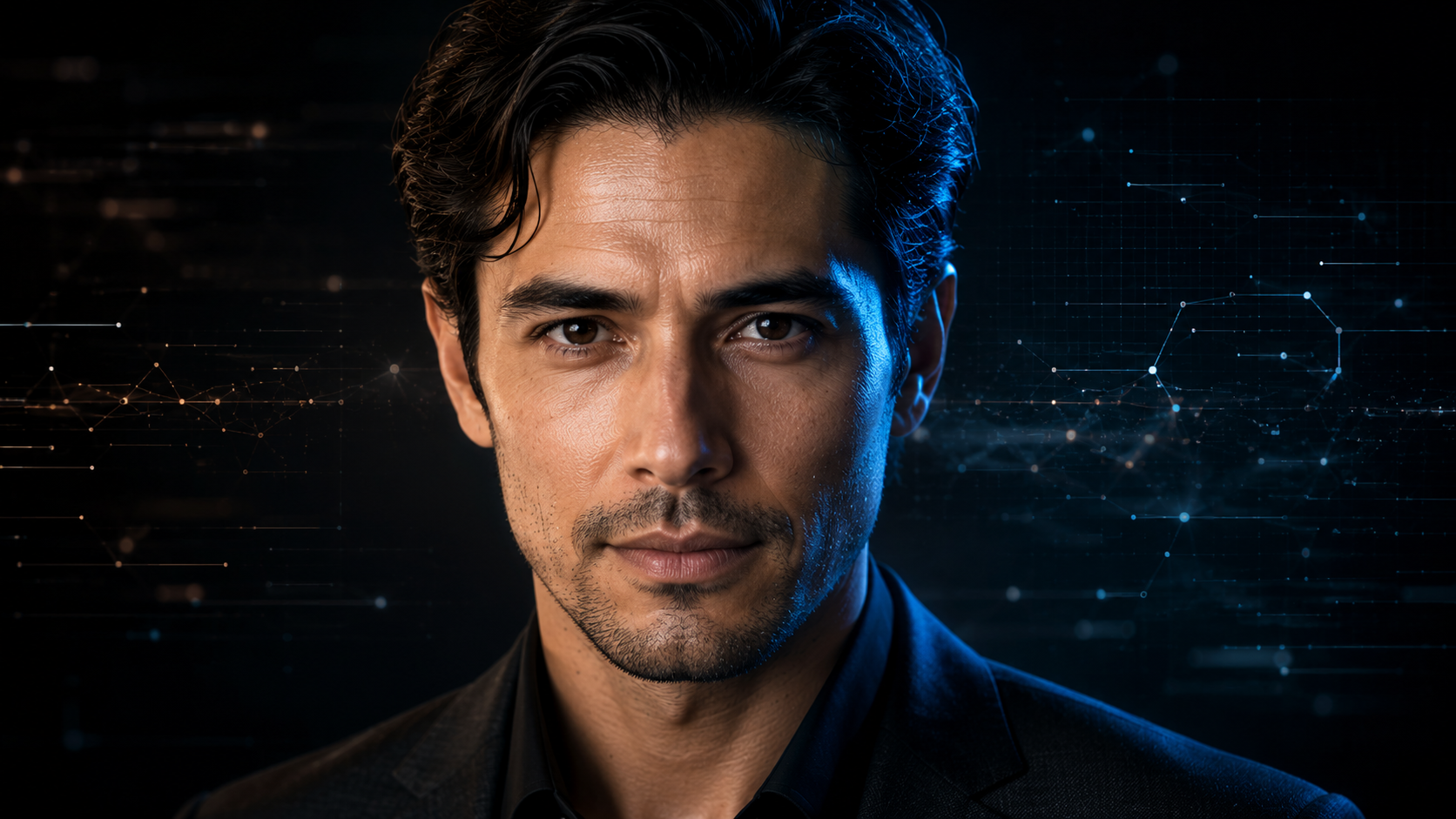
A new platform is betting that the future of AI ads runs through paperwork. HyperKnown has opened a marketplace where verified real people license their face and voice for AI-generated content, priced per project, with documented consent attached. It's an unusual pitch for AI ads, where the creative side usually gets all the attention.
The pitch is straightforward: brands increasingly want recognizable humans in AI ads, but the licensing side hasn't kept up. HyperKnown wants to be the layer that fixes that — and if it works, it could change how AI ads get made. It's the least glamorous part of AI ads, and possibly the most important.
What HyperKnown Is Offering
According to the company's announcement, HyperKnown is a marketplace for "real verified people licensing human likeness in AI generated content." The key terms:
- Verified people — talent on the platform are identity-verified before listing.
- Face and voice — both are licensable, not just appearance.
- Per-project consent — permission is granted for a specific campaign, not in perpetuity.
- Fixed license fees — brands see defined costs rather than open negotiation.
- Documented rights clearance — the platform supplies paperwork for legal and paid-media sign-off.
The company says applications are open to creators worldwide, with casting access for companies, at hyperknown.ai. In other words, AI ads are the product, and consent is the feature.
The Gap HyperKnown Is Targeting
The company frames the problem clearly. Brands that want a real human face in AI ads have had two bad options: use a fully synthetic avatar with no actual person attached, or sign a conventional talent agreement written for a live photo shoot rather than model-based generation.
Neither fits modern AI ads production. A synthetic avatar carries no consent record, and a live-shoot contract doesn't anticipate a model generating new frames of someone's face. HyperKnown positions itself in the middle: real people, with terms drafted for AI generation. For AI ads buyers, that's a meaningfully different starting point.
How the Licensing Flow Works
The mechanics matter more than the marketing. According to the announcement, the process runs like this:
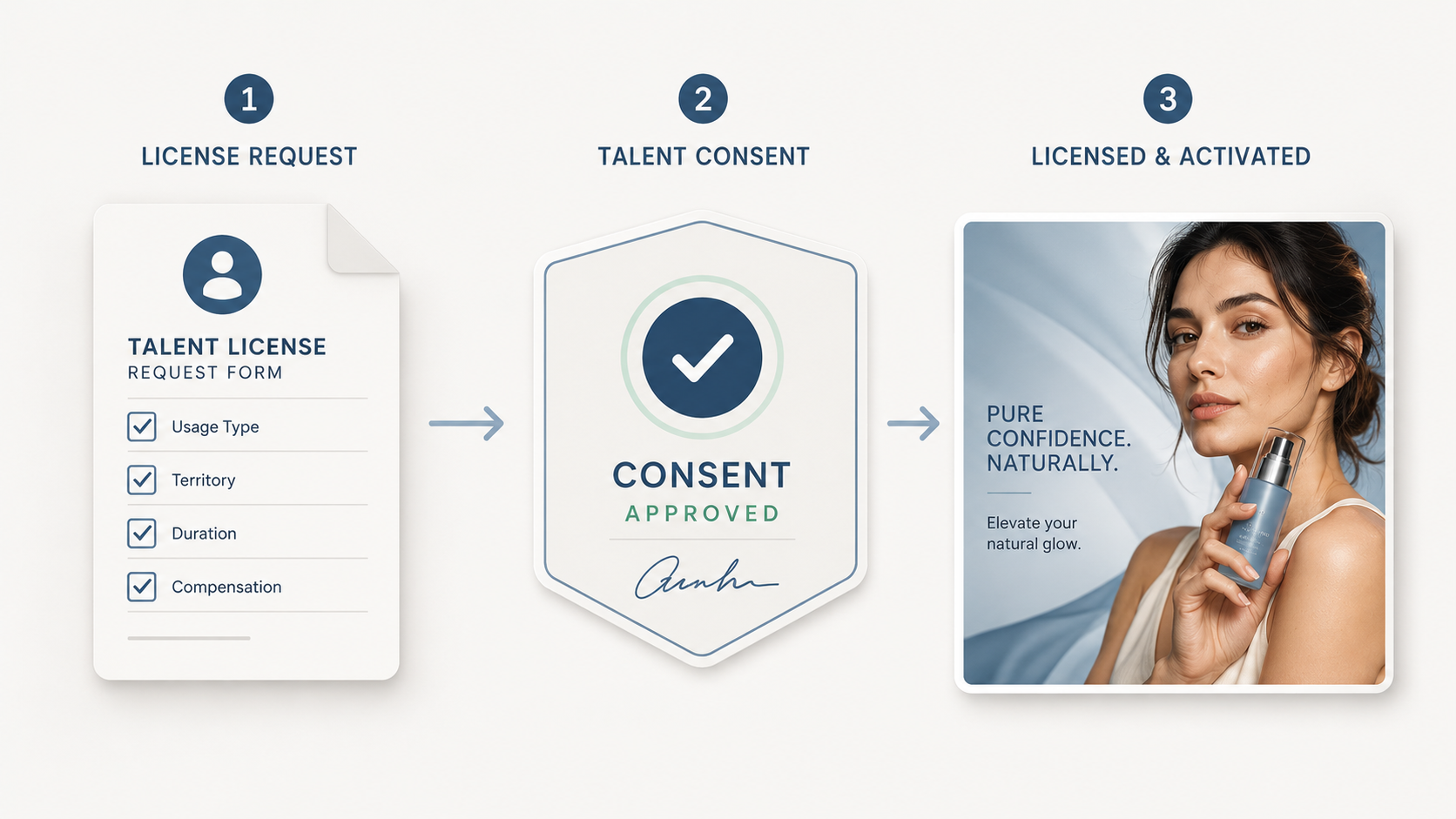
- Brands browse or brief — companies either browse the roster or submit a project brief describing the campaign, channels, and usage period. Every AI ads request starts here.
- Restrictions are checked first — each brief is screened against each person's recorded content restrictions before it reaches them.
- Talent decides — the individual reviews the brief and accepts or declines, which is the core consent step for any AI ads project.
- No charge on decline — nothing is collected before the talent approves, and a decline ends the request at no cost to the brand.
- Rights are transferred on approval — the brand receives documented, verified rights clearance.
- Assets are supplied — HyperKnown provides the licensed high-resolution assets and permissions.
Notably, the announcement says production teams then generate the final AI ads using current models. That's the part most relevant to anyone making images — the licensing market clears rights, then someone still has to create the AI ads themselves.
Why Consent Documentation Is the Real Product
HyperKnown isn't selling faces — it's selling proof. In AI ads, the expensive question is rarely "can we generate this?" It's "can we prove this person agreed?" That's the bottleneck AI ads teams keep running into.
That's why terms like per-project consent and documented clearance matter. As AI ads scale, legal and paid-media teams need a paper trail showing who authorized what, for how long, and on which channels. A marketplace that ships that documentation alongside the image is solving a compliance problem, not a creative one.
It also sets a useful precedent: licensing real likeness for AI ads can be explicit, opt-in, and paid. If that becomes the norm, AI ads get easier to run at scale.
The Caveat: Read This as a Company Announcement
One important note. This news comes from HyperKnown's own press release, distributed via Newsfile and republished across multiple outlets — it is not independent reporting, and the claims above are the company's own.
No roster size, client list, or pricing detail has been independently verified. Treat the mechanics as described intentions until third-party coverage or real campaign usage confirms them. That's normal caution for any new marketplace, and worth remembering before citing AI ads numbers from this launch — especially since AI ads infrastructure is still being defined.
What It Means for Creators
Three practical implications stand out for anyone producing AI ads:
- Consent is becoming a feature — documented permission is turning into a selling point, not a legal afterthought for AI ads.
- Real faces still beat synthetic ones — brands want recognition, which keeps licensed likeness valuable for AI ads.
- The generation layer is separate — someone still has to make the actual images once the rights are cleared.
That last point is where most creators live. The licensing market handles permission; the image still has to be produced. Nothing about a rights marketplace removes the need to actually make good AI ads.
A Prompt to Try Today
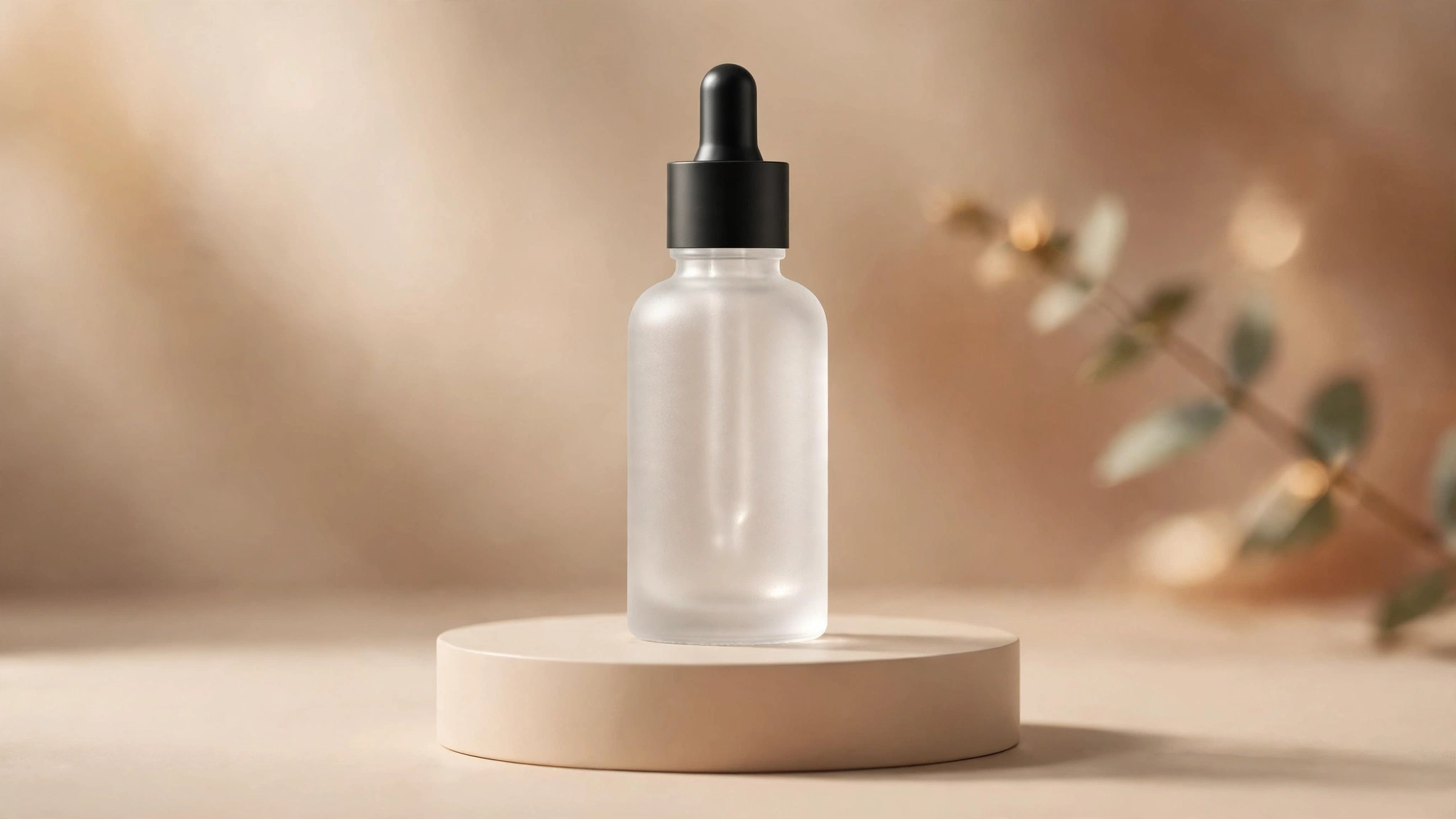
If you're producing AI ads concepts, a clean product-forward frame is a good place to start. Most successful AI ads for ecommerce lean on exactly this kind of shot. Try this on Fanch AI:
Copy & Paste this into Fanch AI (Model: gpt_image_2):
Create a polished advertising photograph for a skincare brand: a frosted glass serum bottle centered on a smooth beige pedestal, with a soft natural shadow and a subtle highlight along the bottle edge. Behind it, a softly blurred warm-toned background with a single eucalyptus sprig. Clean, premium, minimal commercial product photography, 16:9 framing, sharp focus on the bottle, 8K detail, no text.
Why Fanch AI Is Where the Ad Gets Made
Markets like HyperKnown sort out who agreed to what. Somebody still has to produce the visuals. Fanch AI gives you a dedicated image model you direct with precise prompts, so you can build polished AI ads imagery — product shots, lifestyle scenes, campaign concepts — in one clean interface without chasing approvals for your tooling too. Permissions aside, AI ads still live or die on the image itself.
👉 Start here: GPT Image 2 on Fanch AI — create your own AI ad imagery now.