Midjourney Hollywood Style: The Complete Prompt Guide to Cinematic AI Art | Fanch AI
Filmmakers spend millions on lighting, lenses, and color grading to get that unmistakable Hollywood look. What if you could capture the same cinematic magic with a well-crafted AI art prompt? The Midjourney Hollywood style has become one of the most sought-after aesthetics in AI image generation — combining the dramatic lighting of a Christopher Nolan film, the color palette of a Michael Mann thriller, and the lens quality of a big-budget production. Here's how to master it.
1. The Core Elements of the Hollywood Cinematic Look
Before you start generating, you need to understand what makes an image look "Hollywood." The Midjourney Hollywood style relies on four pillars:
- Dramatic lighting: Rembrandt lighting, chiaroscuro, golden hour, or practical neon sources
- Anamorphic characteristics: Oval bokeh, horizontal lens flare, 2.35:1 aspect ratio
- Film texture: Kodak Portra grain, 35mm or 65mm film stock simulation
- Professional color grading: Teal-orange complementary palette, deep shadows, controlled highlights
The magic of the Hollywood style in Midjourney is that you don't need photography skills — the right prompt parameters handle everything from depth of field to color science.
2. The Master Prompt: Hollywood Cinematic Portrait
This is your foundation. The Midjourney Hollywood aesthetic starts with a carefully structured prompt that signals cinematic intent at every level:
Copy & Paste this into Fanch AI:
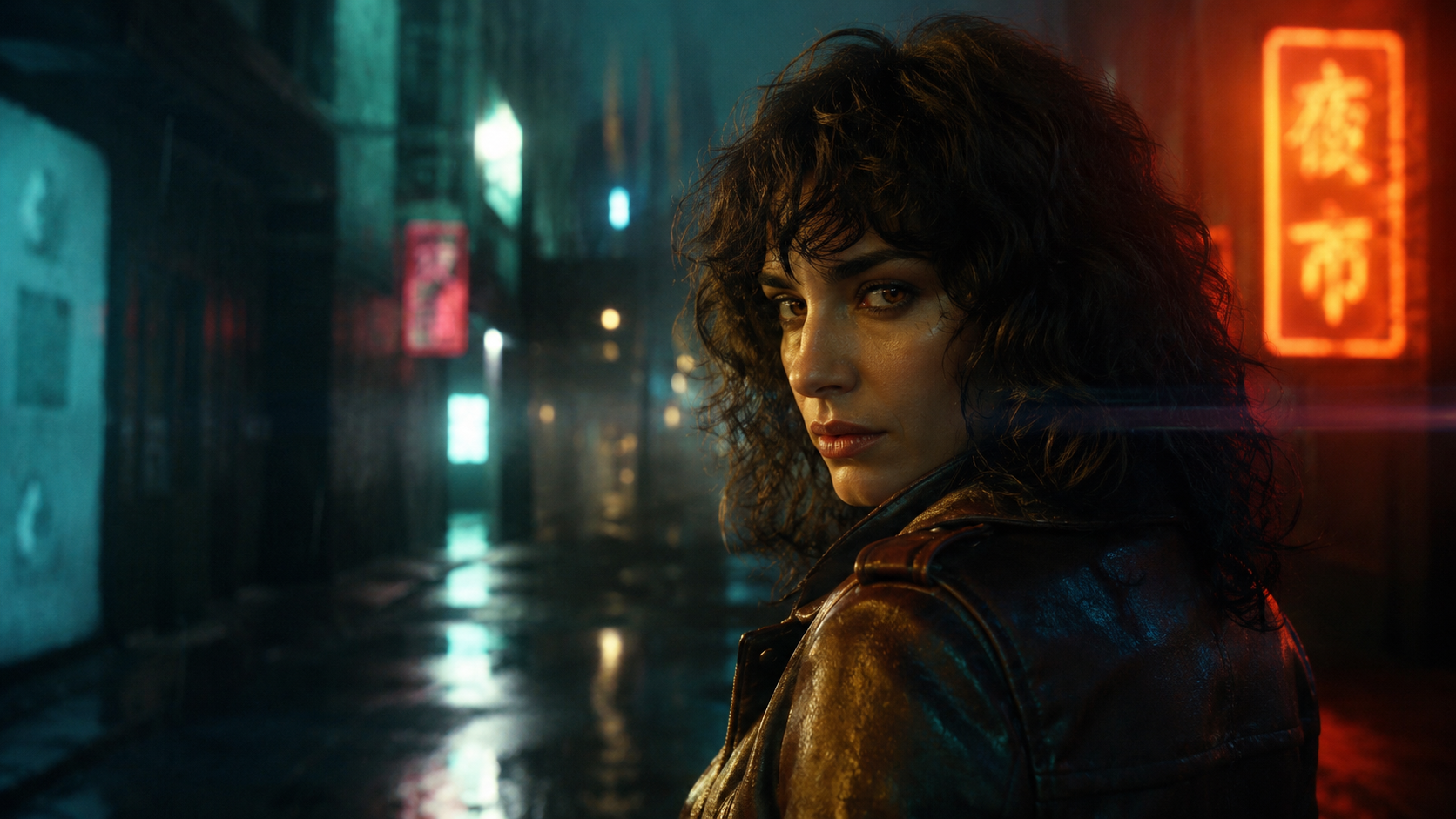
Cinematic portrait of a woman in her 30s, dark curly hair, intense amber eyes, wearing a vintage leather jacket, standing in a rain-slicked neon-lit alleyway at night, cinematic lighting, anamorphic lens flare, 35mm film grain, rich shadows, teal and orange color grading, depth of field, photorealism —ar 16:9 —stylize 250
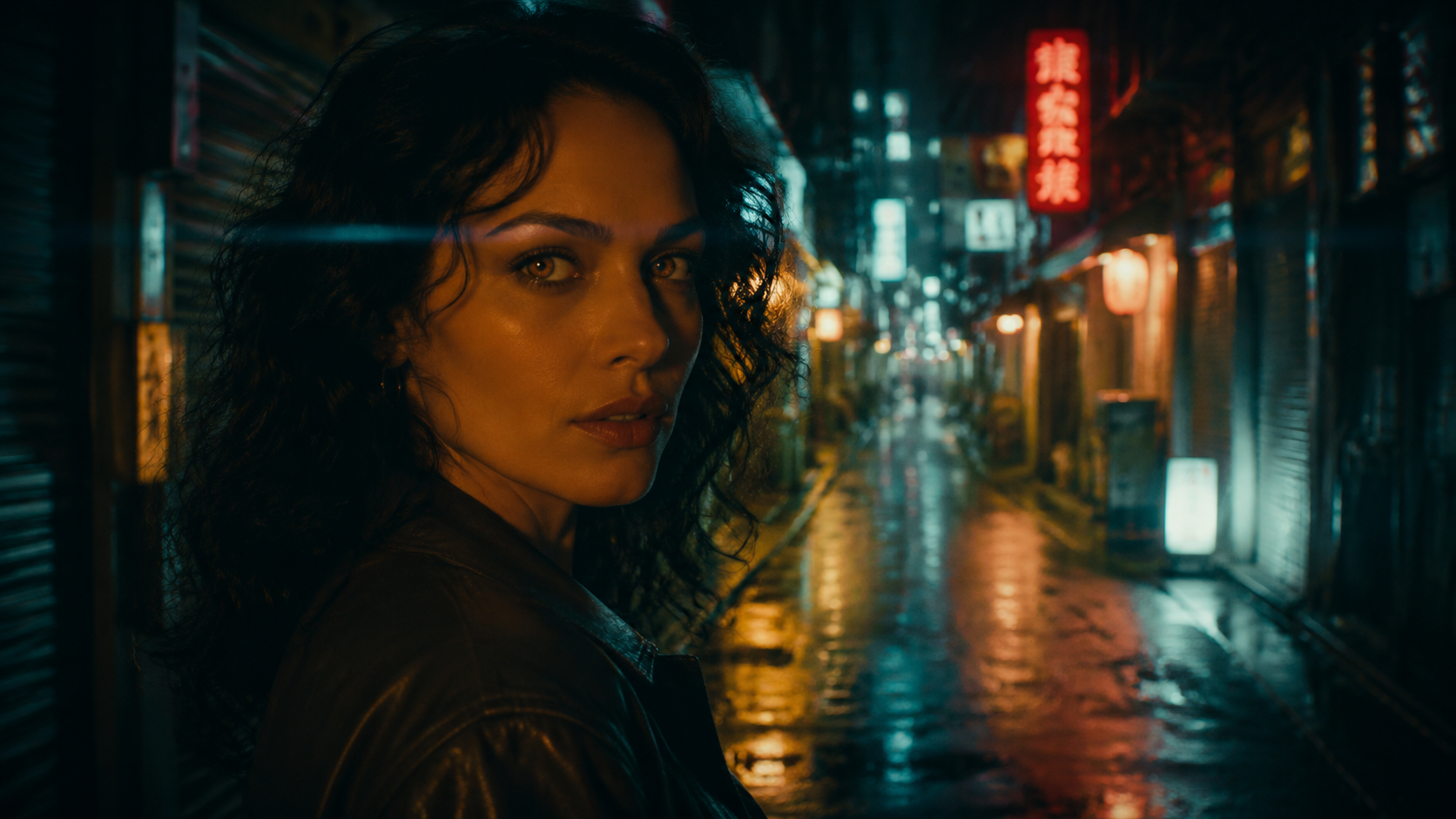
The key modifiers here are doing the heavy lifting. cinematic lighting triggers Midjourney's film-trained dataset. anamorphic lens flare introduces the horizontal light streaks that scream Hollywood. 35mm film grain adds the organic texture that separates a real photo from a synthetic render. And the teal and orange color grading is Hollywood's most iconic color pair dating back to The Matrix and Transformers.
3. The Golden Hour Epic
Hollywood's most photographed lighting condition is golden hour — that 20-minute window when the sun sits low and bathes everything in warm, soft light. This Midjourney Hollywood prompt captures that blockbuster feel:
Copy & Paste this into Fanch AI:
Wide-angle shot of a lone figure walking across a salt flat desert at sunset, golden hour lighting, dramatic long shadows, anamorphic 65mm, cinematic volumetric light rays, warm amber and deep purple sky, film grain texture, epic scope, hyper-realistic —ar 16:9 —stylize 300
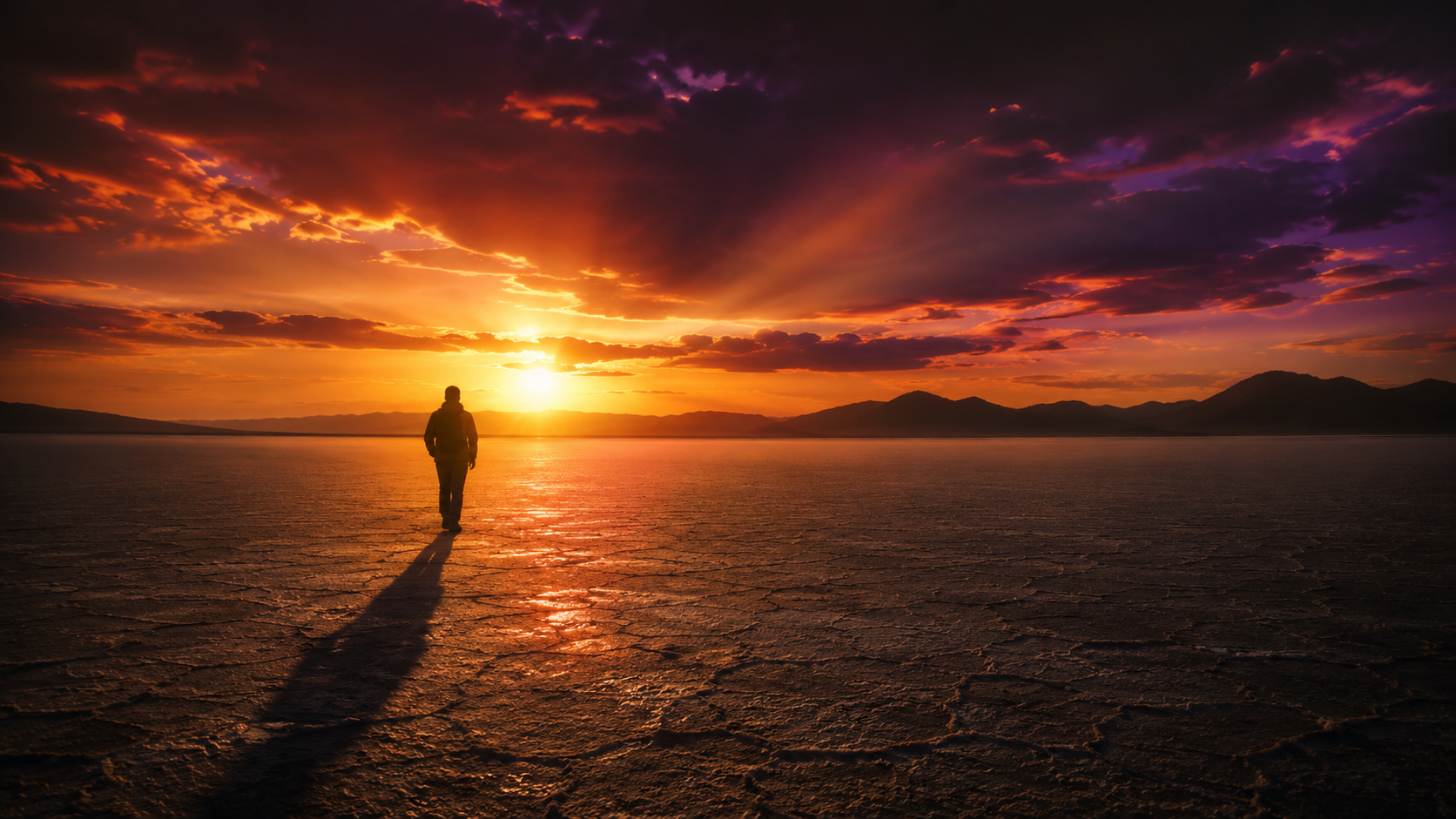
The volumetric light rays parameter is the secret here — it creates the god rays that give Hollywood epics their spiritual, awe-inspiring quality. Pairing warm amber skies with deep purple shadows maintains that signature Hollywood color contrast.
4. The Neo-Noir Crime Thriller
The neo-noir aesthetic — think Drive, Blade Runner 2049, or Heat — has become a defining Midjourney Hollywood style in its own right. It trades warm tones for cold blues and saturated neons:
Copy & Paste this into Fanch AI:
A detective in a trench coat standing under a flickering motel sign at midnight, pouring rain, reflective wet pavement, neon blue and magenta lighting, heavy shadows, film noir atmosphere, anamorphic lens, cinematic grain, shallow depth of field, gritty realism —ar 16:9 —stylize 200
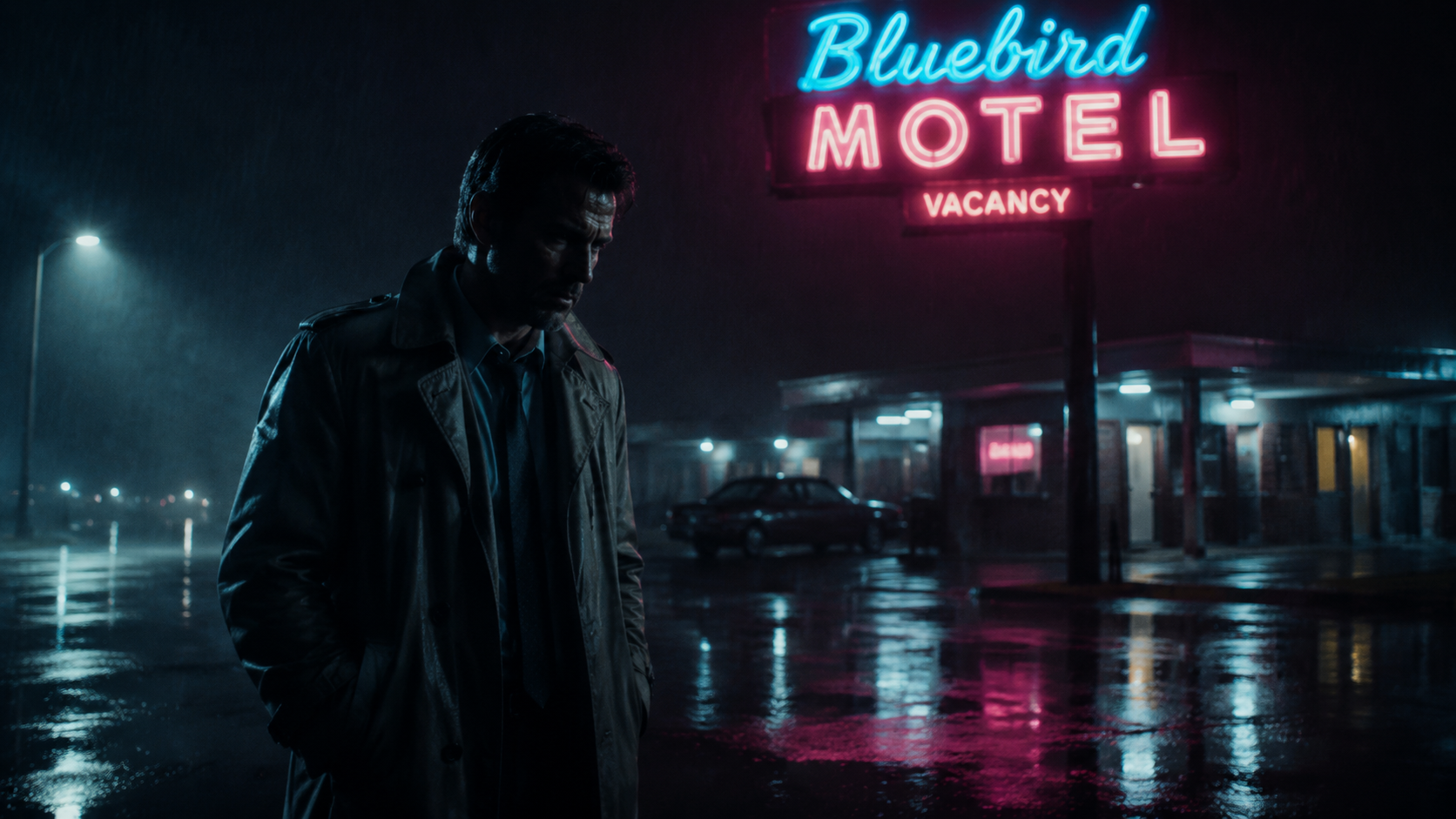
The brilliance of this Hollywood AI art prompt lies in its lighting contrast. The neon blue and magenta against heavy shadows creates the visual tension that makes neo-noir so arresting. The reflective wet pavement adds that extra layer of production value — a classic cinematographer's trick.
5. The Period Drama (Cinematic Vintage)
Hollywood period films have a distinct visual language: desaturated colors, softer contrast, and the organic warmth of vintage glass. This Midjourney cinematic style is perfect for historical or retro aesthetics:
Copy & Paste this into Fanch AI:
A 1920s jazz singer on stage in a smoky speakeasy, wearing a beaded flapper dress, warm tungsten stage lighting, shallow depth of field, vintage anamorphic lens, sepia-toned highlights, Kodachrome color palette, film grain, nostalgic atmosphere —ar 16:9 —stylize 250
The Kodachrome color palette is what separates this from a generic vintage look. Hollywood costume dramas use specific film stock emulations, and this prompt channels that same analog warmth. The tungsten stage lighting creates the focused pools of light that period cinematographers relied on.
6. The Blockbuster Action Shot
For explosive, high-energy compositions that feel straight out of a summer tentpole, this Midjourney Hollywood action prompt delivers:
Copy & Paste this into Fanch AI:
A stunt car jumping over a broken bridge in an exploding cityscape, sparks and debris flying, dramatic backlighting, fast shutter freeze frame, anamorphic lens, motion blur on wheels, cinematic color grading, Michael Bay-style explosion, high contrast —ar 16:9 —stylize 350
The combination of fast shutter freeze frame with motion blur on wheels is the cinematographic trick that makes action scenes feel both explosive and grounded. The Michael Bay-style explosion parameter signals high-energy visual effects without descending into cartoon territory.
Pro Tips for Refining Your Hollywood Style
The Midjourney Hollywood aesthetic is highly sensitive to two parameters: --stylize and --weird. For cinematic realism, keep --stylize between 200 and 350 — too low and images look flat, too high and they drift into illustration territory. The --style raw parameter also helps maintain photographic authenticity by reducing Midjourney's default artistic bias.
Color grading is everything. Hollywood's teal-orange look works because orange skin tones contrast naturally against teal backgrounds. You can replicate this in your prompts by explicitly pairing warm subject descriptions (golden skin, amber light) with cool environment descriptions (indigo sky, teal shadows).
The lens matters more than you think. Always include one of these in your prompt: anamorphic, 35mm, 65mm, vintage lens, or Panavision. Each signals a different cinematic tradition to the model.
Start Creating Your Hollywood AI Art Today
The Midjourney Hollywood style proves that you don't need a $50 million budget to create cinematic imagery. With the right prompts, you can generate Hollywood-quality portraits, landscapes, and action scenes from your browser. And the best part? You can run all of these prompts — plus hundreds more cinematic parameters — directly on Fanch AI with our advanced image generation models that understand every nuance of cinematic language.