
Old Money Aesthetic AI Photos: 6 Prompts That Don't Look Cheap
The old money aesthetic has been the dominant visual language on Instagram and TikTok for years now — a deliberate rejection of the logo-covered "new money" flexing that defined the 2010s. Business Insider traced that shift to Gen Z and millennials who wanted their wealth to look inherited rather than purchased.
So people ask an AI for the old money aesthetic and get back something that looks like a costume rental. Gold everywhere, a rented sports car, a model staring straight down the lens in a blazer two sizes too tight.
That gap is the whole problem with the old money aesthetic, and it is a prompting problem. The old money aesthetic is built from a small set of visual codes, and if you do not name them, the model fills the vacuum with the loudest possible version of luxury.
The Old Money Aesthetic Is Not One Look
Here is the finding worth starting with. A 2026 study by the communications firm 5WPR asked five different AI engines to describe old money, and reported the results as five different old monies — none of which actually described the money.
That should change how you prompt the old money aesthetic. There is no canonical old money aesthetic sitting inside these models waiting to be unlocked. Each model has absorbed a different collage of influences — Ralph Lauren campaigns, British costume drama, finance-bro Pinterest boards — and returns whatever mixture dominates its training data. Ask for the old money aesthetic with no further detail and you get that model's guess, not your intent.
The fix is unglamorous: spell out the codes.
The Codes That Actually Read as Inherited
Across the reference imagery that reliably reads as old money — and across what the better AI outputs get right — the same elements recur.
Setting over subject. The old money aesthetic is mostly a place. Gravel drives, walled gardens, oak-panelled rooms, tennis courts, lake docks, stone terraces. A person in a plain coat standing in the right place reads richer than a person in a showroom.
Worn, not new. The single tell that separates the old money aesthetic from new money is condition. Chipped paint, faded linen, a leather chair with a patina, a slightly unkempt garden. Everything in the frame should look like it has been there for decades.
Restraint in the palette. The old money aesthetic uses camel, cream, olive, navy, oxblood, weathered stone. If the palette has more than three colours, it has stopped being the old money aesthetic and become a fashion editorial.
Absence of logos. This is the definitional rule of the old money aesthetic. The moment a brand mark appears, the image becomes new money. Say no logos, no brand marks in every prompt.
Posture that isn't selling. Turned away from camera, mid-gesture, looking at something off-frame. The old money aesthetic never poses for the lens; it is photographed unawares.
Soft, natural light. Overcast daylight, window light, late afternoon — the old money aesthetic has no other lighting. Not HDR, not studio flash, not neon.
6 Old Money Aesthetic Prompts
Each is a single scene with the old money aesthetic codes baked in. Change the location, keep the structure.
1. The Estate Drive
A misty gravel drive curving toward a stone country house at dawn, flanked by mature beech trees and low iron fencing, wet grass at the edges, soft overcast light, muted olive and weathered grey palette, fine detail in the stonework and gravel texture, shallow depth of field, cinematic, no people, no text.
2. The Tennis Court
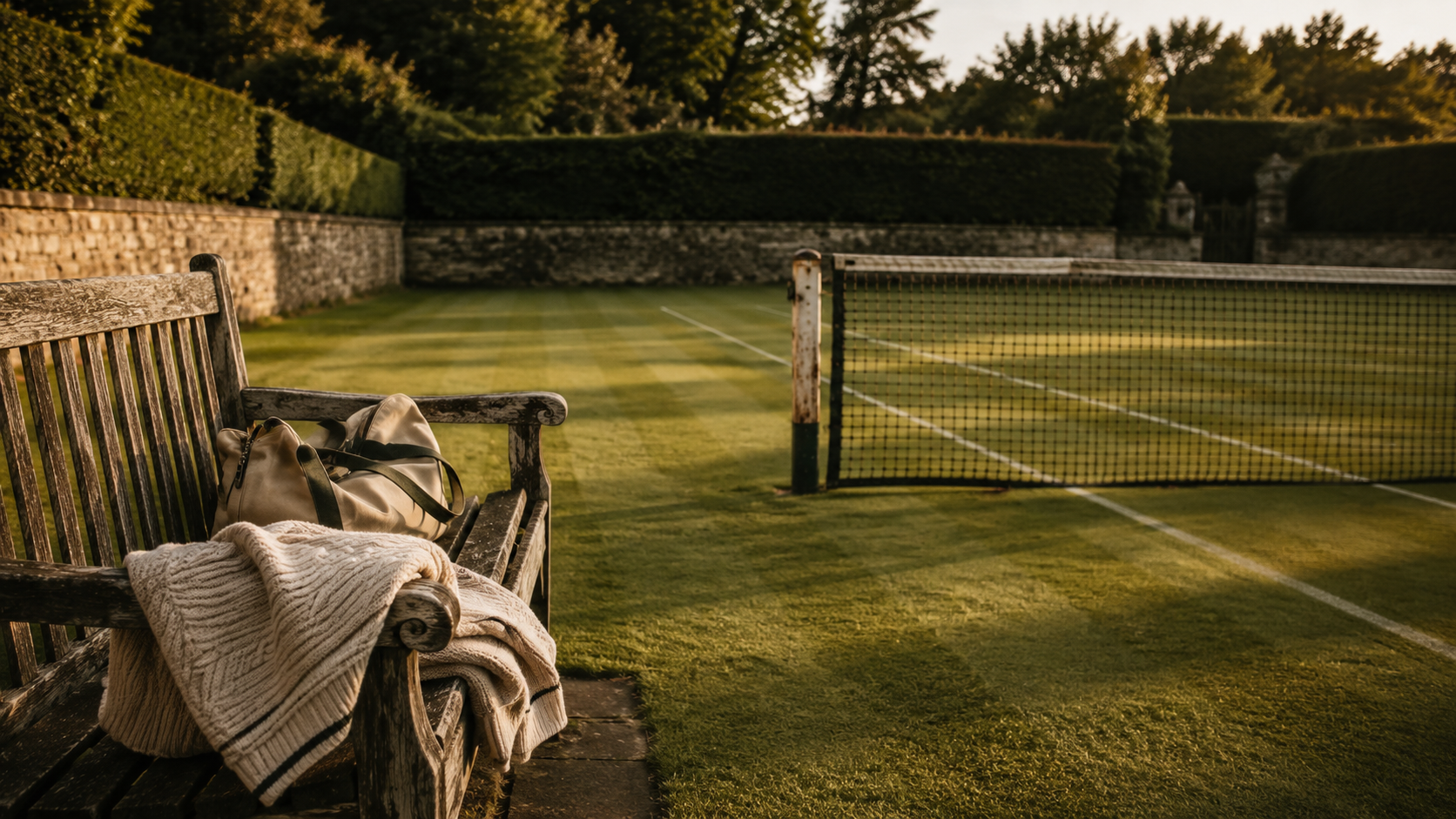
A grass tennis court in late afternoon light, a wooden bench at the sideline with a folded cream sweater and a canvas bag resting on it, long shadows across the mown grass, weathered net posts, soft warm light, restrained green and cream palette, film grain, cinematic, no people, no text.
3. The Library
The interior that does most of the work in any old money aesthetic set.
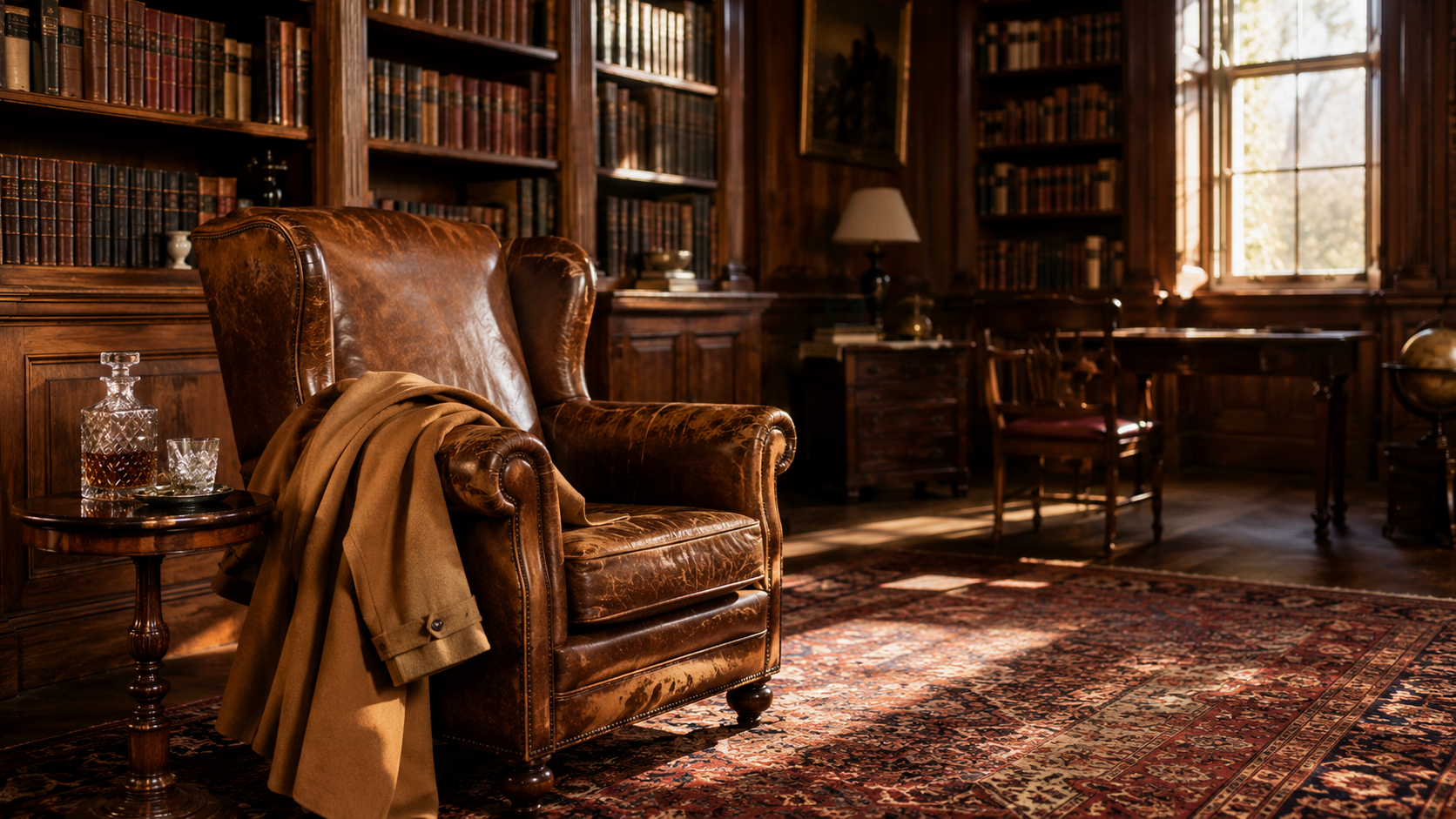
An oak-panelled library lit by tall windows, a worn leather wingback chair, floor-to-ceiling shelves of cloth-bound books, a faded Persian rug over dark floorboards, a crystal carafe on a side table, warm afternoon light raking across the room, deep browns and oxblood, fine material texture, shallow depth of field, cinematic, no people, no text.
4. The Lake Dock
The old money aesthetic does not need a subject to read as wealthy.
A weathered wooden dock extending into a still lake at dawn, low mist on the water, a canvas duffel and a straw hat resting on the planks, distant treeline in soft silhouette, muted blue and pale gold palette, gentle reflections, fine wood grain detail, cinematic, no people, no text.
5. The Portrait
The hardest one to get right, because the model wants to make the subject stare at the camera.
A three-quarter rear view of an adult in a tailored camel overcoat and cream turtleneck, walking along a wet cobblestone street past a stone wall, face turned away and out of focus, soft overcast daylight, muted camel and grey palette, 50mm lens feel, shallow depth of field, gentle film grain, no visible brand marks, no text.
6. The Quiet Table
The still life most old money aesthetic sets skip.
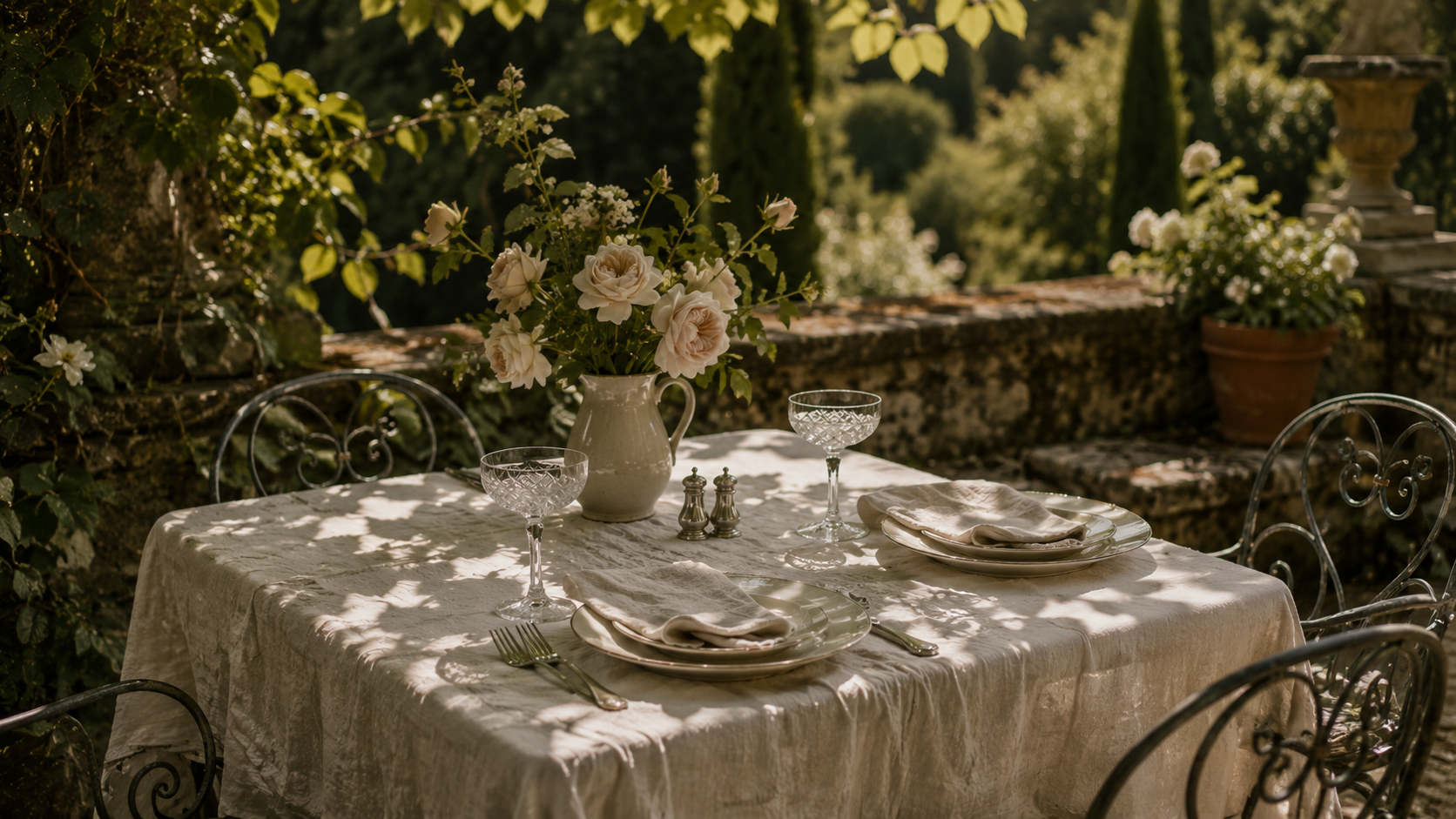
A garden table set for two on a stone terrace: rumpled linen cloth, crystal coupe glasses, silver cutlery, a small jug of garden roses, dappled late-afternoon light through leaves, weathered stone surface, deep greens and warm whites, fine textile and glass detail, shallow depth of field, cinematic, no people, no text.
Why Most AI Old Money Looks Cheap
If your old money aesthetic generations keep missing, it is almost always one of these five things.
A logo crept in. Even a plausible badge on a bag destroys the effect. Audit every output for brand marks.
The light is wrong. HDR skies and crisp studio flash read as advertising. The old money aesthetic lives in flat, soft, natural light.
Everything is new. New cars, new furniture, new clothes. Add words like worn, faded, patina, weathered — they do more for the look than any luxury noun.
The palette is too loud. Two or three muted tones beat seven bright ones — the old money aesthetic has a small colour budget.
The subject is posing. Front-facing eye contact is the fastest way to make the old money aesthetic look like a rental service ad. Turn the subject away.
Brand Safety: What You Can't Prompt
Two practical limits for the old money aesthetic worth respecting, because they will waste your credits otherwise.
No real brands, no real designers, no real heiresses. Naming a fashion house or a living person for an old money aesthetic image gets refused or produces off-model results. Describe the garment instead of its maker — tailored camel overcoat, no visible brand marks is both safer and more controllable.
Adults only, fully clothed, neutral activity. The old money aesthetic is a fashion and interiors language, and every prompt above stays inside that. Keep it there.
A Prompt to Try
The fastest way to see the difference is one interior with the codes fully spelled out. Try this:
Copy & Paste this into Fanch AI (Model: gpt_image_2):
A sunlit oak-panelled library in a country house: a worn leather wingback chair with a faded camel wool coat draped over one arm, floor-to-ceiling shelves of cloth-bound books, a faded Persian rug over dark floorboards, a crystal carafe on a small side table, tall windows casting long warm afternoon light across the room. Deep browns, oxblood and warm cream, visible material texture in the leather and wool, shallow depth of field, editorial photography feel, 16:9 framing, 8K detail, no people, no brand logos, no text overlay.
Compare that to "luxury mansion interior" and the gap in the old money aesthetic is not subtle. The old money aesthetic is a specification, not a mood.
Why Fanch AI Fits
The old money aesthetic rewards specificity — named settings, muted palettes, worn surfaces, turned-away subjects — and that is exactly what a controlled image model gives you. Fanch AI lets you direct each element of the frame with a precise prompt and iterate cheaply until the room, the light, and the palette are right.